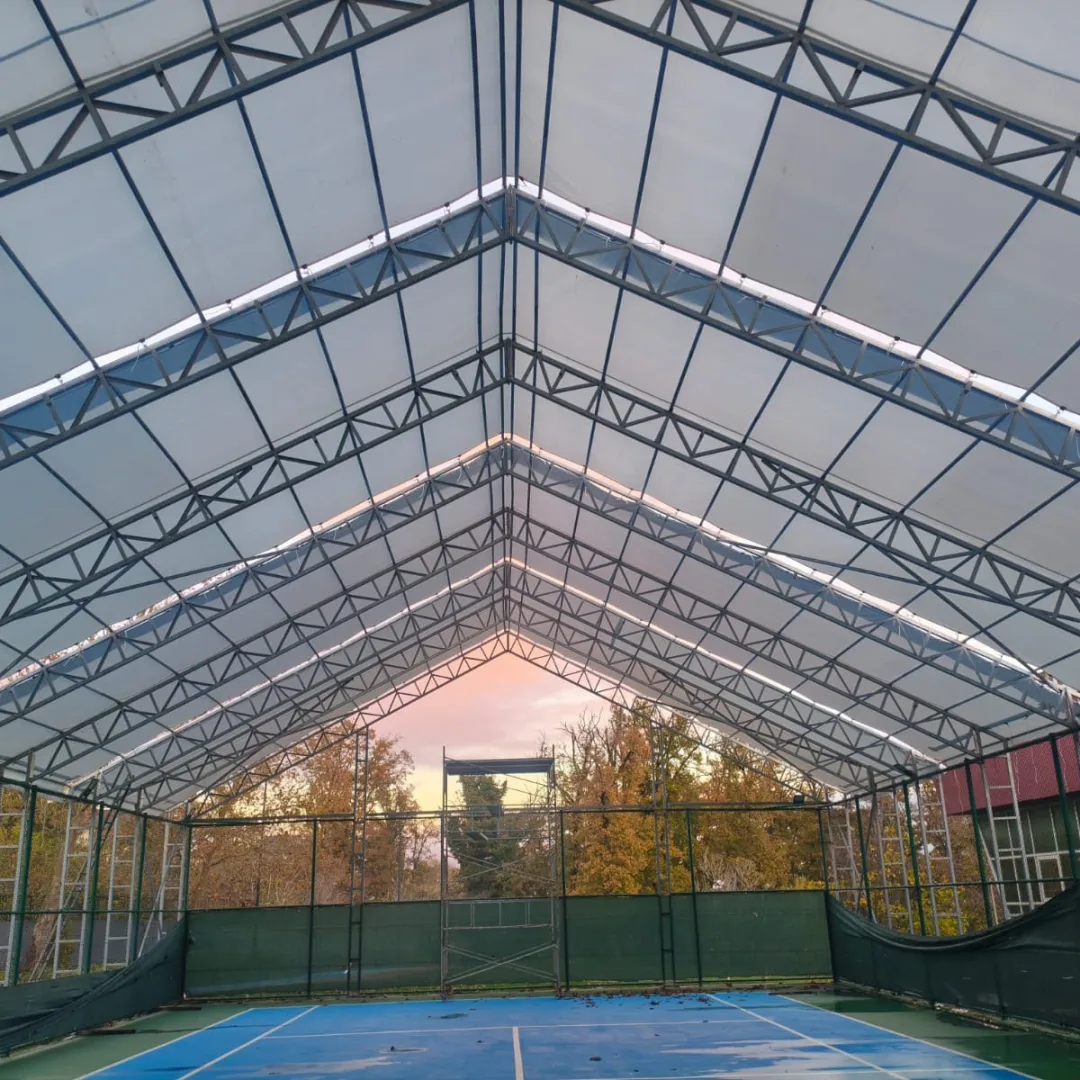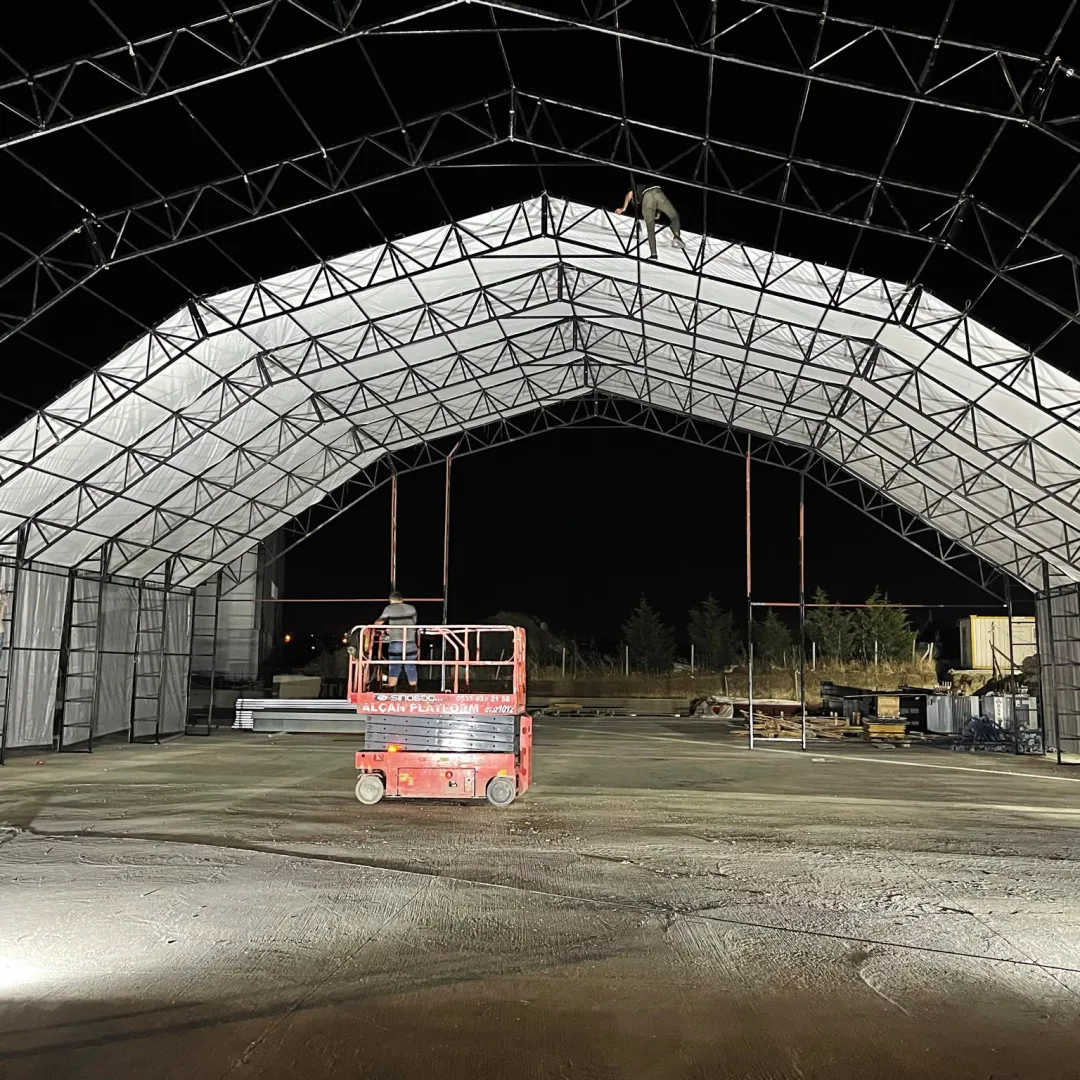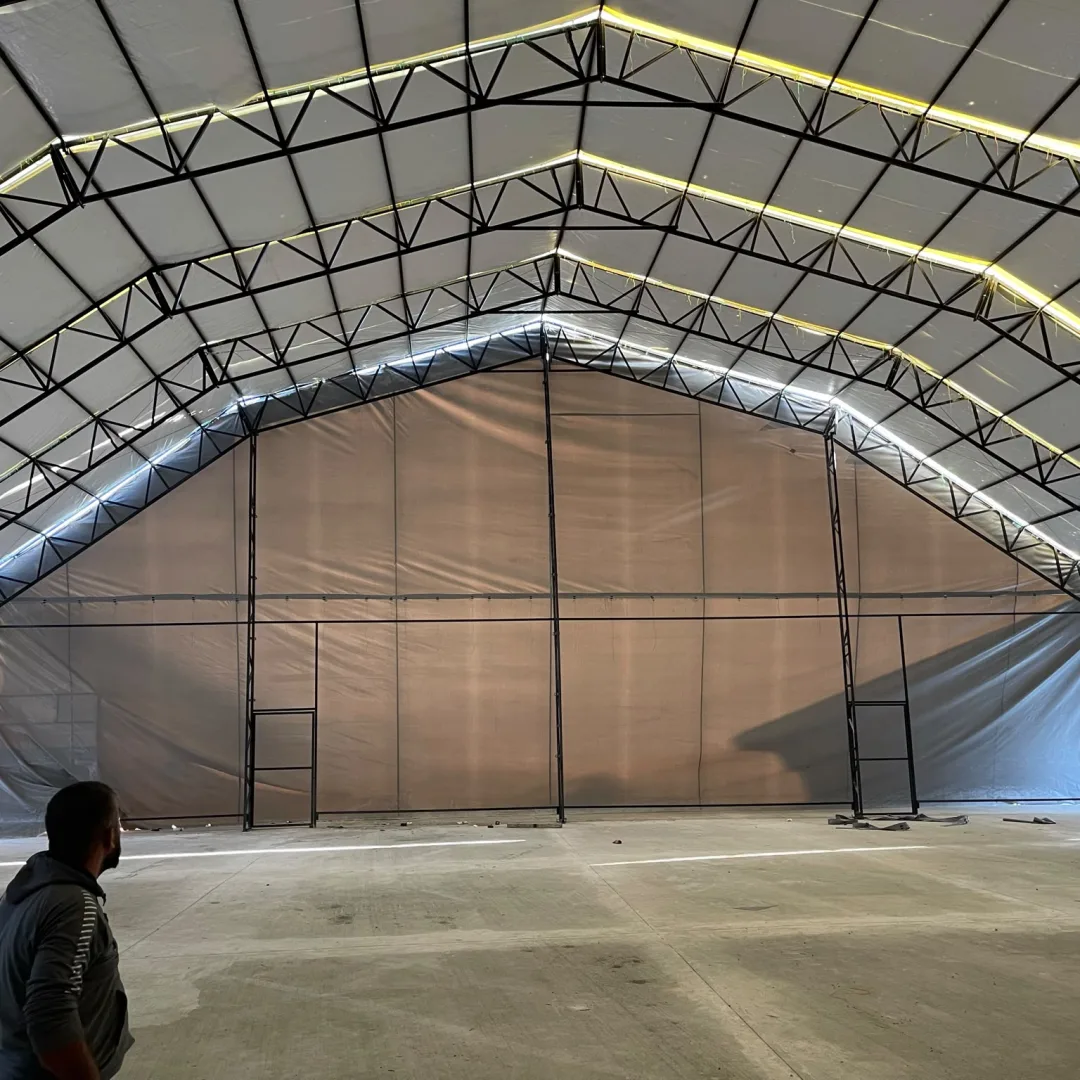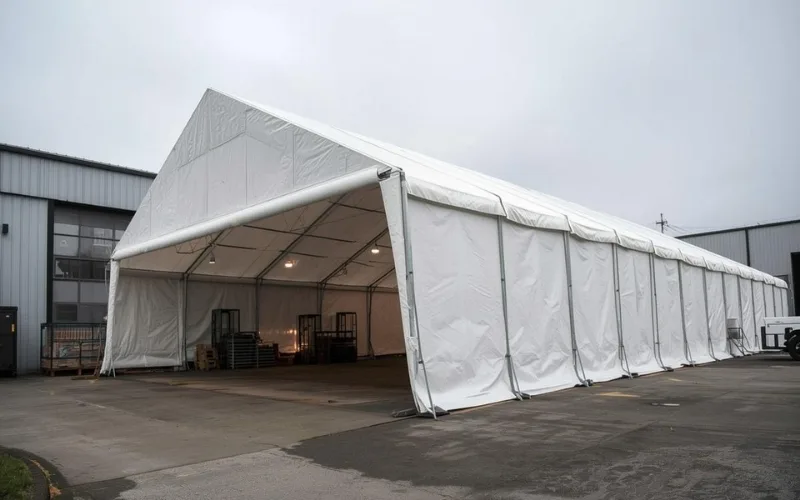
An industrial tent is an enclosed space with a steel frame and PVC fabric cover, built inside an existing factory or organised industrial zone plot. When extending a building would take too long, it serves as an extra raw material store, a product stock area or an auxiliary production area. At Dry Çadır we design these tents around the free space inside the plant, the position of the buildings and the vehicle routes.
Choosing the position on a factory site
In an industrial tent, the free area on the plot often limits the size. At the site survey we first look at the ground and the dimensions. Then we work out together where forklifts and trucks will pass, where the tent will connect to the production building and which side the doors will open on. The closer the tent stands to the factory, the shorter the haul between production and storage. We cover this separately in our article on whether a warehouse tent can be put up next to a factory.
Size range and structure
For industrial tents we work in widths of 5-40 m and heights of 3-10 m. The length grows in modules. The structure is galvanised steel. Profiles are chosen by structural calculation for the span and the wind and snow load at the site.
If a tent is put up without a structural calculation or without correct anchoring, the frame can deform under wind or snow load.
Warehouse or production area?
The same frame is fitted out differently depending on what goes on inside. If it will only hold stock, standard fabric and wide doors are often enough. For areas where machines and lines will be installed, see our manufacturing tent page.
An example from Manisa OSB
At the Manisa Organised Industrial Zone plant of Modern Ambalaj, which belongs to Eren Holding, we erected an industrial-type storage tent for protecting raw materials, storage and dispatch. The tent stands inside the factory site and provides the extra space that production needs.
We give the price as a project-specific quote, based on the size, the fabric weight, the number of doors, the insulation and the structural load.