
Articles
18 articles
-
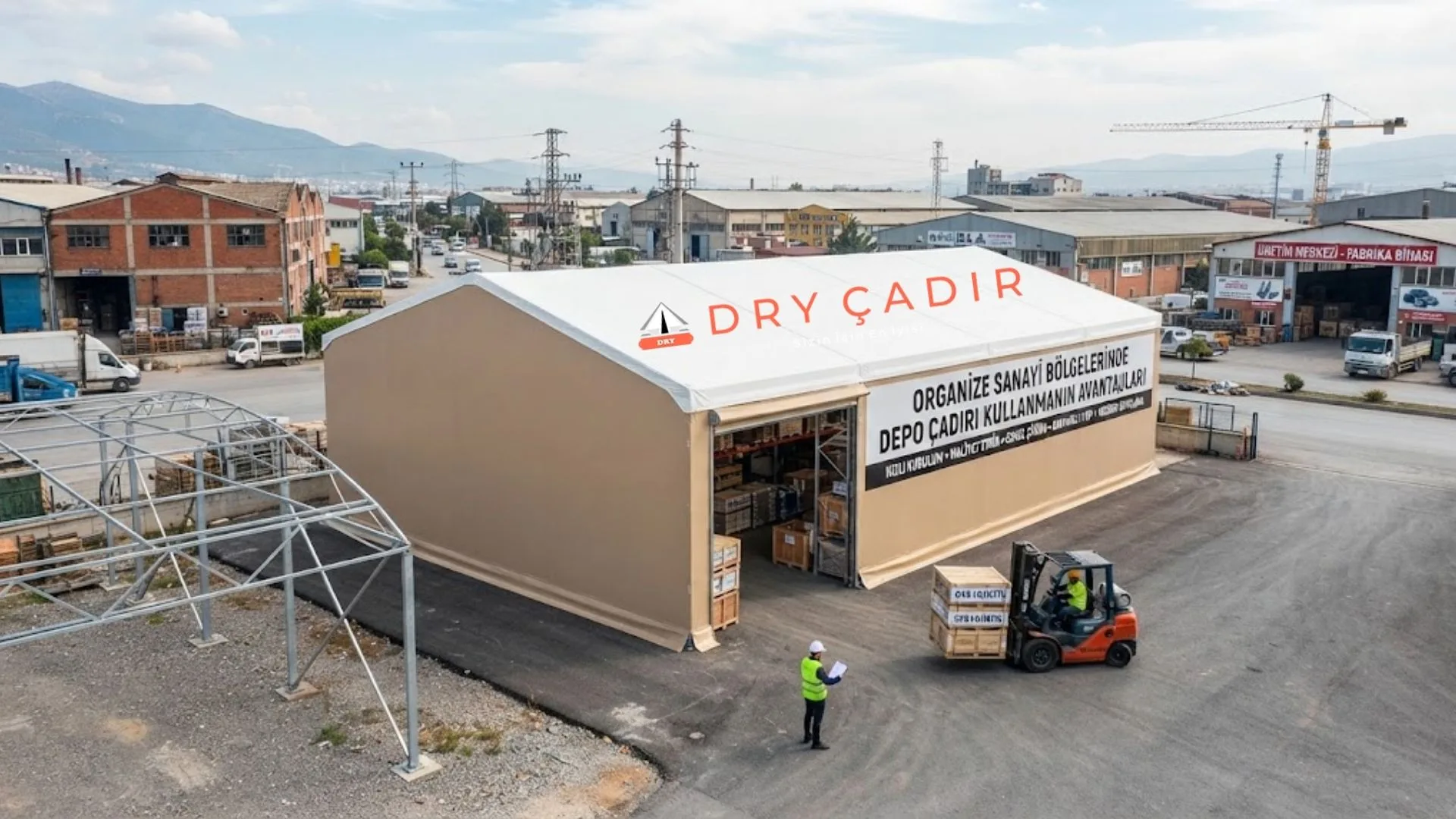
Warehouse Tents in Organised Industrial Zones (OSB): Permits, Use and Planning
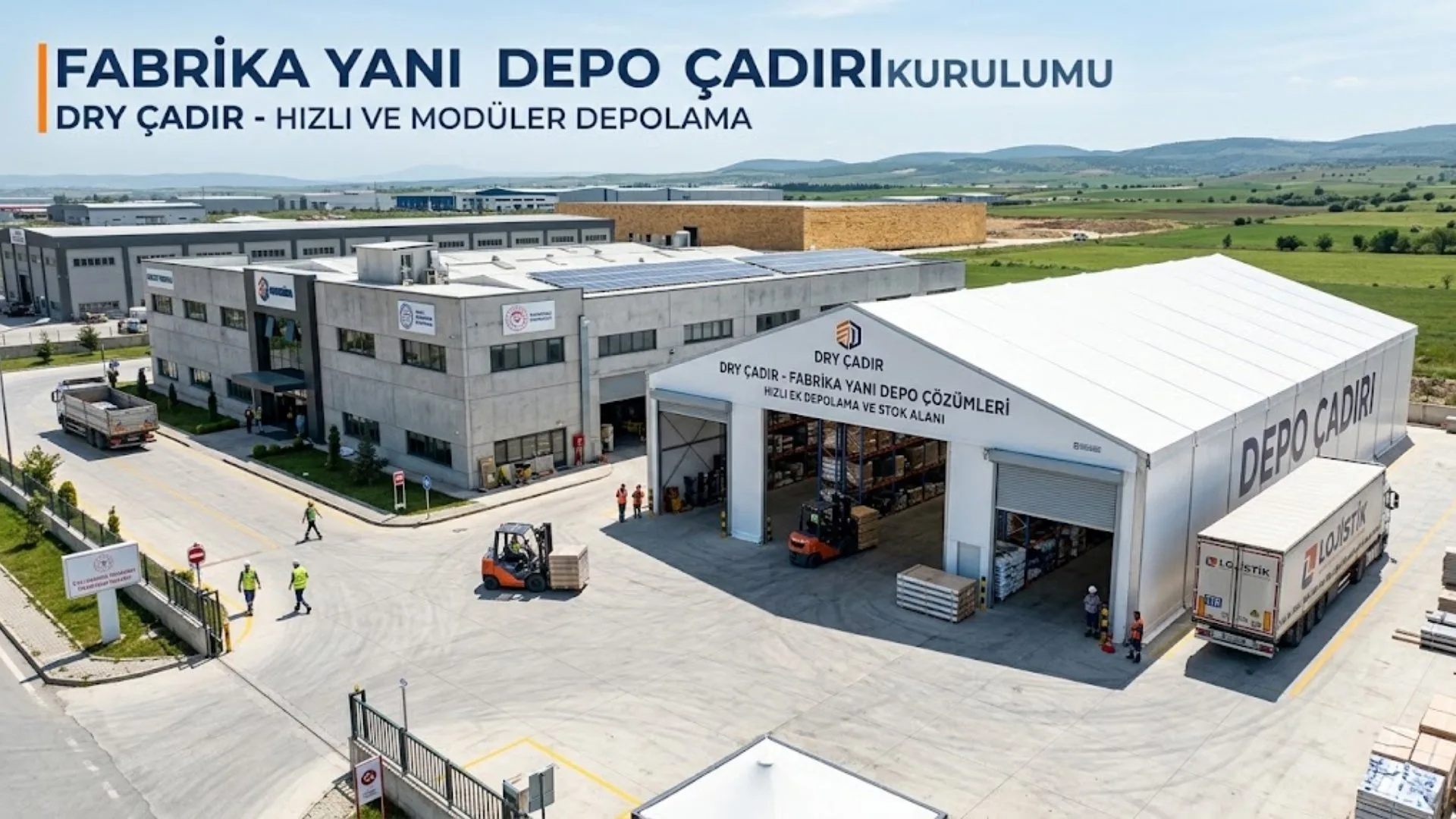
A factory in an organised industrial zone (OSB) that has free space on its plot can gain extra enclosed storage with a warehouse tent. This article covers who grants the permit, what the tent is used for and how to plan forklift and semi-trailer traffic.
-
Can You Put a Warehouse Tent Next to a Factory?
Yes, a warehouse tent can stand next to a factory, provided the plot has room, the competent authority approves it and the design follows the ground, snow load and wind load. This guide covers permits, ground, model choice and a pre-quote checklist.
-
What Is Lightweight Construction? Do Warehouse Tents Count?
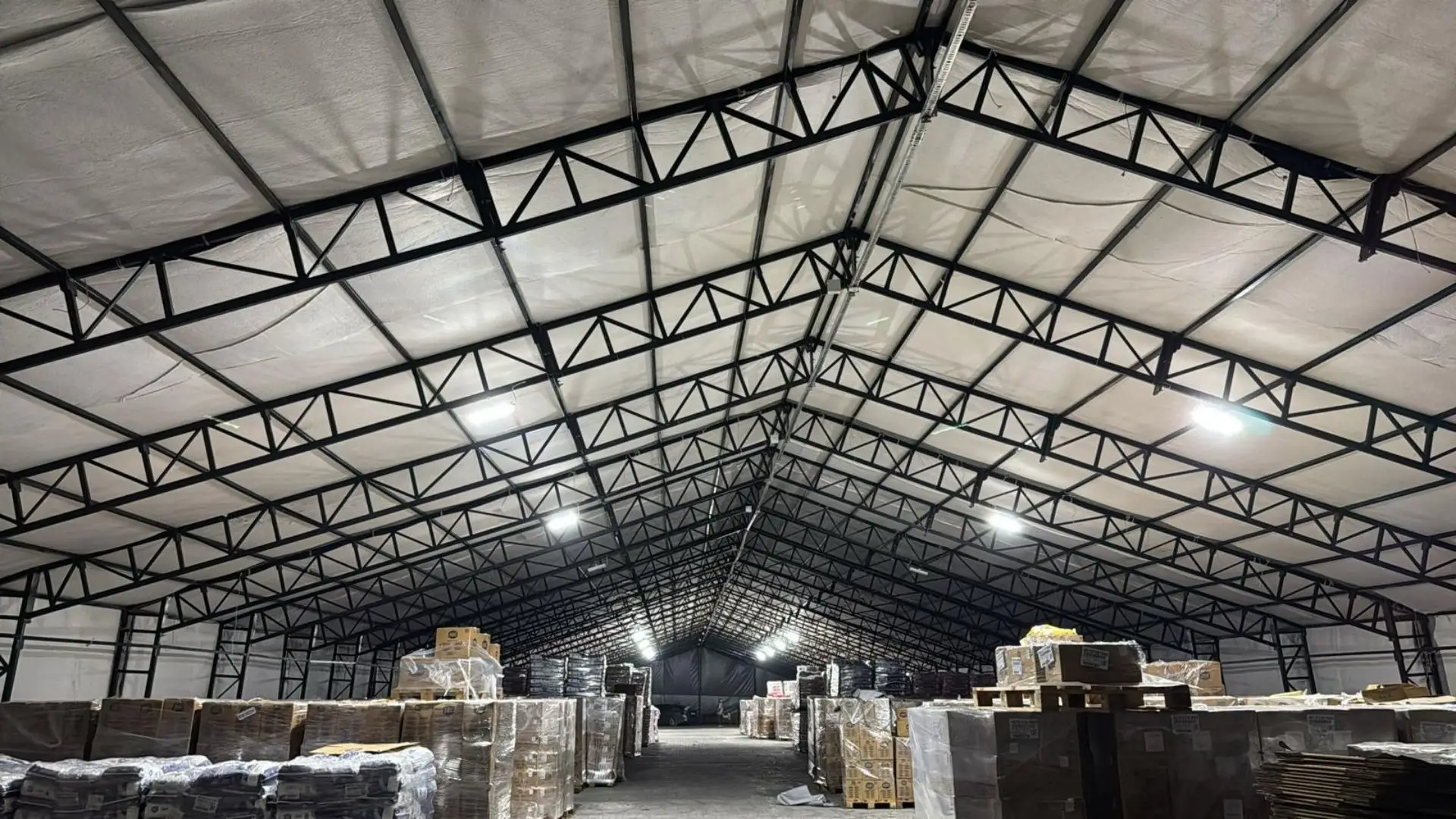
Lightweight construction covers structures whose load-bearing system is built from low-weight elements such as thin-section steel, aluminium profiles or membranes. This guide covers the types, where warehouse tents fit and common selection mistakes.
-
Industrial Tent Installation Stages: From Site Survey to Handover
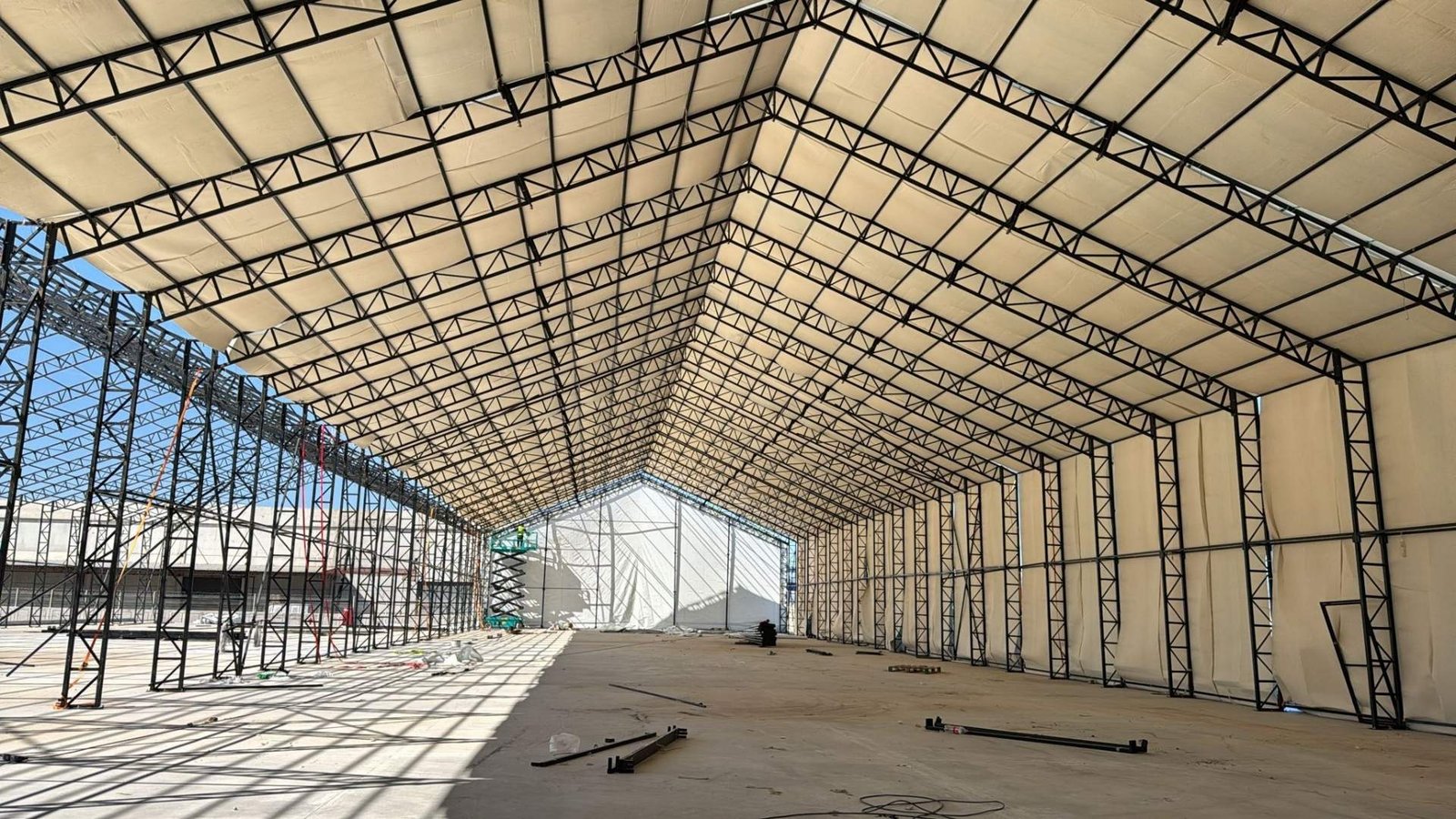
Industrial tent installation runs in seven stages: site survey, design and structural calculation, ground preparation, steel erection, membrane covering, doors and auxiliary systems, and final inspection. What happens at each stage and what is expected of you.
-
How to Prevent Condensation in Industrial Tents
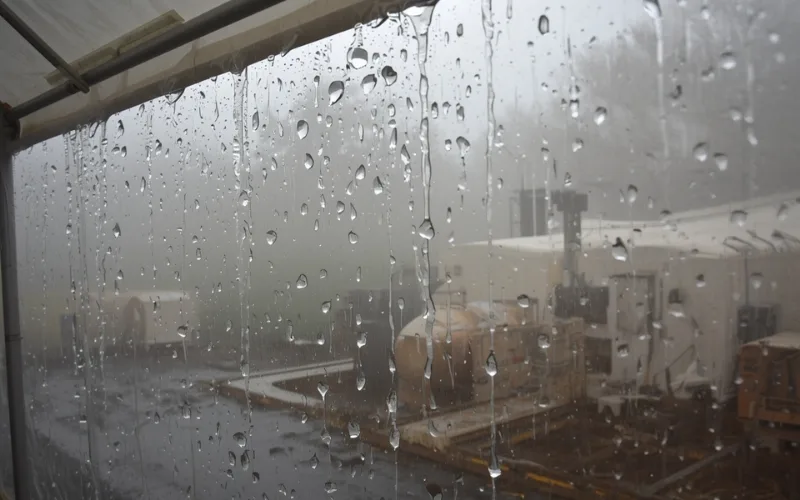
Condensation in a tent happens when humid air inside meets the cold tarpaulin surface and turns to water. You prevent it by keeping the inner tarpaulin surface warm, venting humid air out and cutting the sources of moisture.
-
Technical Specification for an Industrial Warehouse Tent: What to Write
There is no single right figure to write into a warehouse tent specification for profile thickness, tarpaulin weight or wind resistance; these values come out of a structural calculation for the load at the site. Which headings the specification needs, and common mistakes.
-
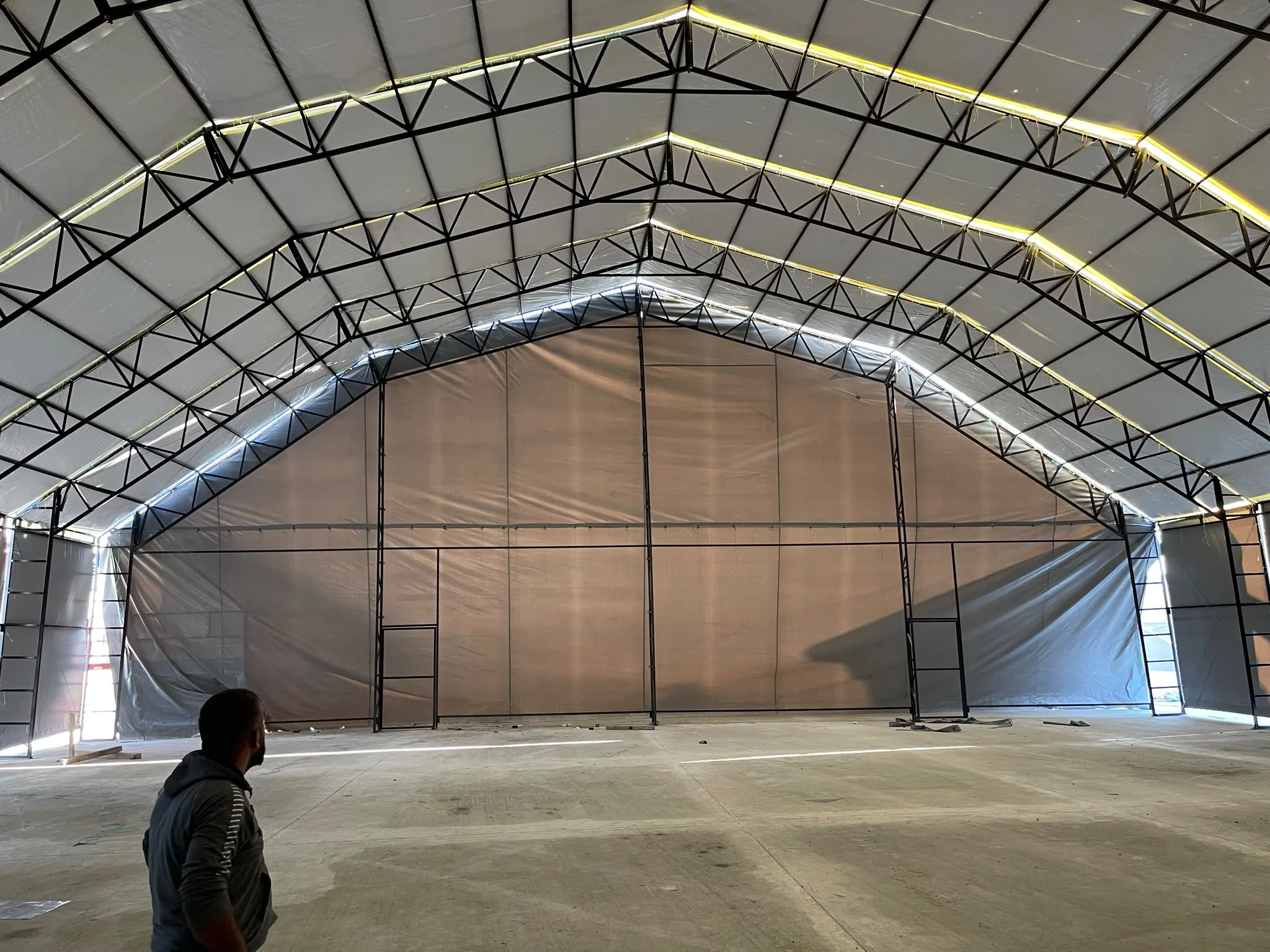
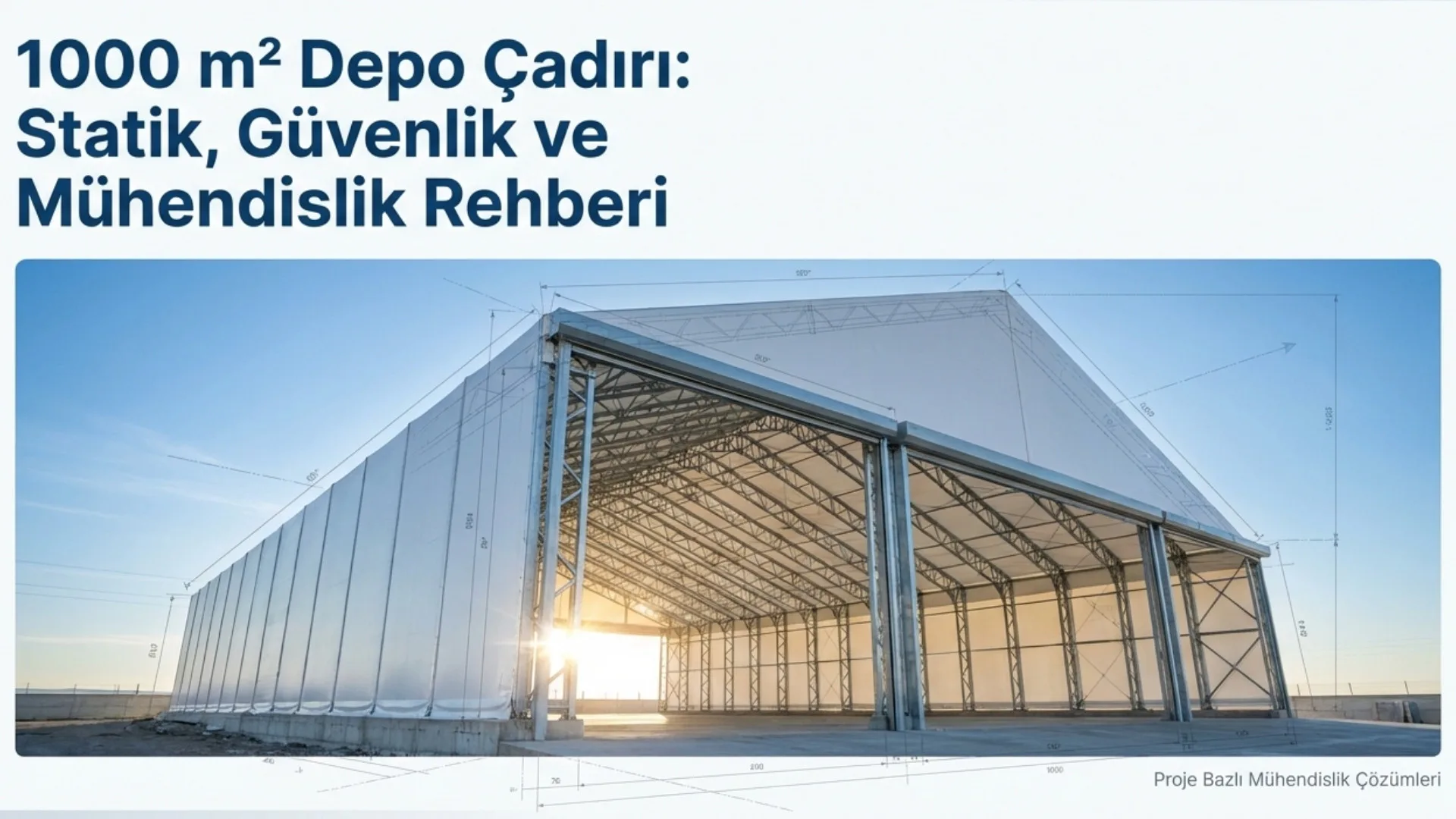
1,000 m² Warehouse Tent: Dimensions, Span and Installation Plan
A 1,000 m² warehouse tent is usually built at sizes such as 20 x 50 m or 25 x 40 m, with a column-free interior, a galvanised steel frame and a PVC tarpaulin cover. The right size depends on the span, the sidewall height and the door requirements.
-
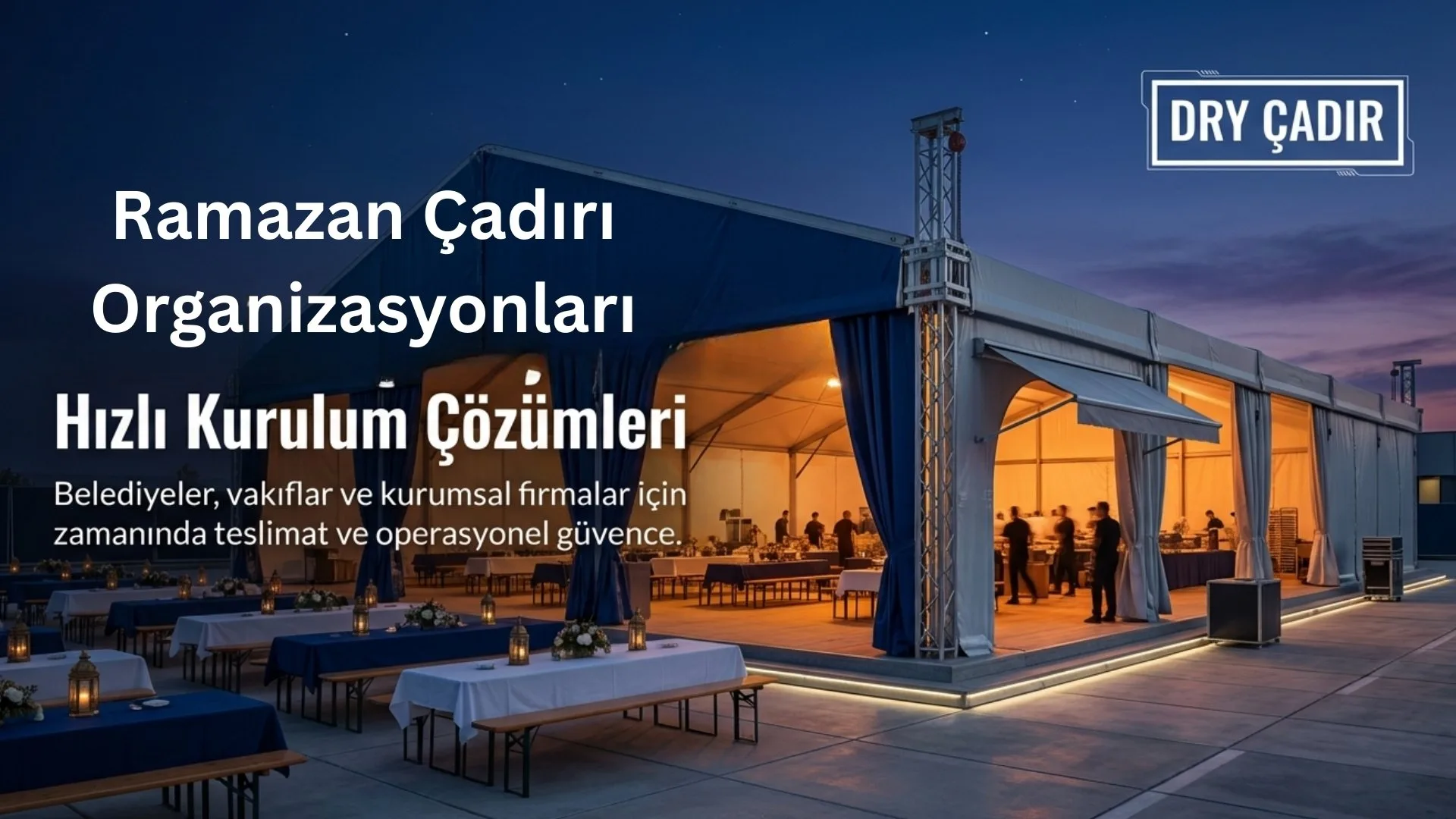
Urgent Iftar Tent for Ramadan: How Far in Advance Should You Plan?
An urgent iftar tent installation is possible, but delivery time is not a single number. Whether a stock system or a custom size is used, the ground, the weather and the permit process set the time; the safest way is to plan weeks before Ramadan.
-
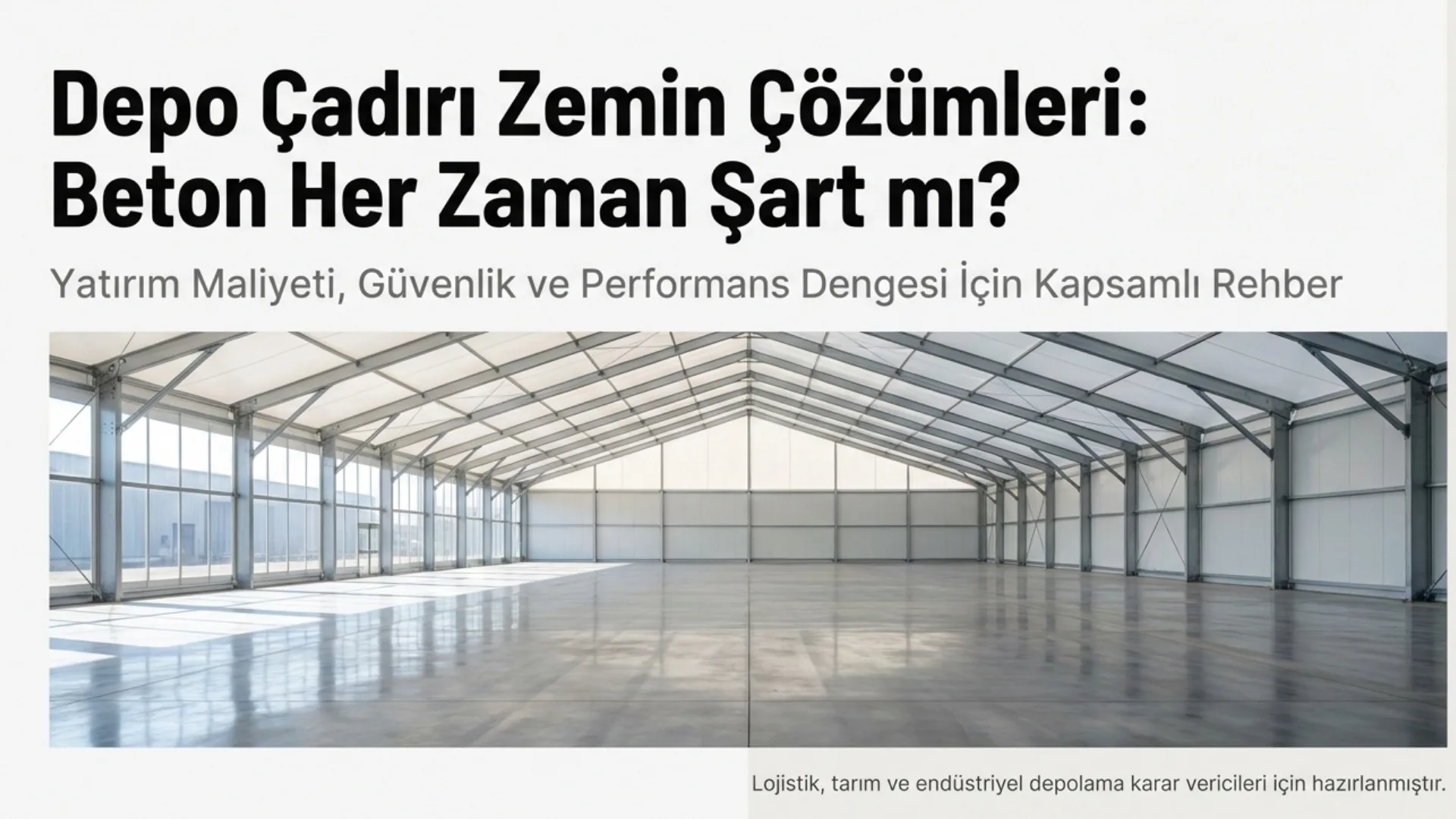
Does a Warehouse Tent Need a Concrete Floor? Ground Options
A concrete floor is not always needed for a warehouse tent. We explain which loads suit stabilised ground, asphalt, precast concrete slabs and steel platforms, when concrete is really required, and the questions to ask before deciding.
-
Iftar Tent Planning: Structure, Tarpaulin and Site Logistics
The decisions that make an iftar tent safe and comfortable are taken before installation: the size that comes from the table layout, local wind and snow load, tarpaulin and ventilation, electricity, exits, transport and dismantling. Planning notes for municipalities and institutions.

-
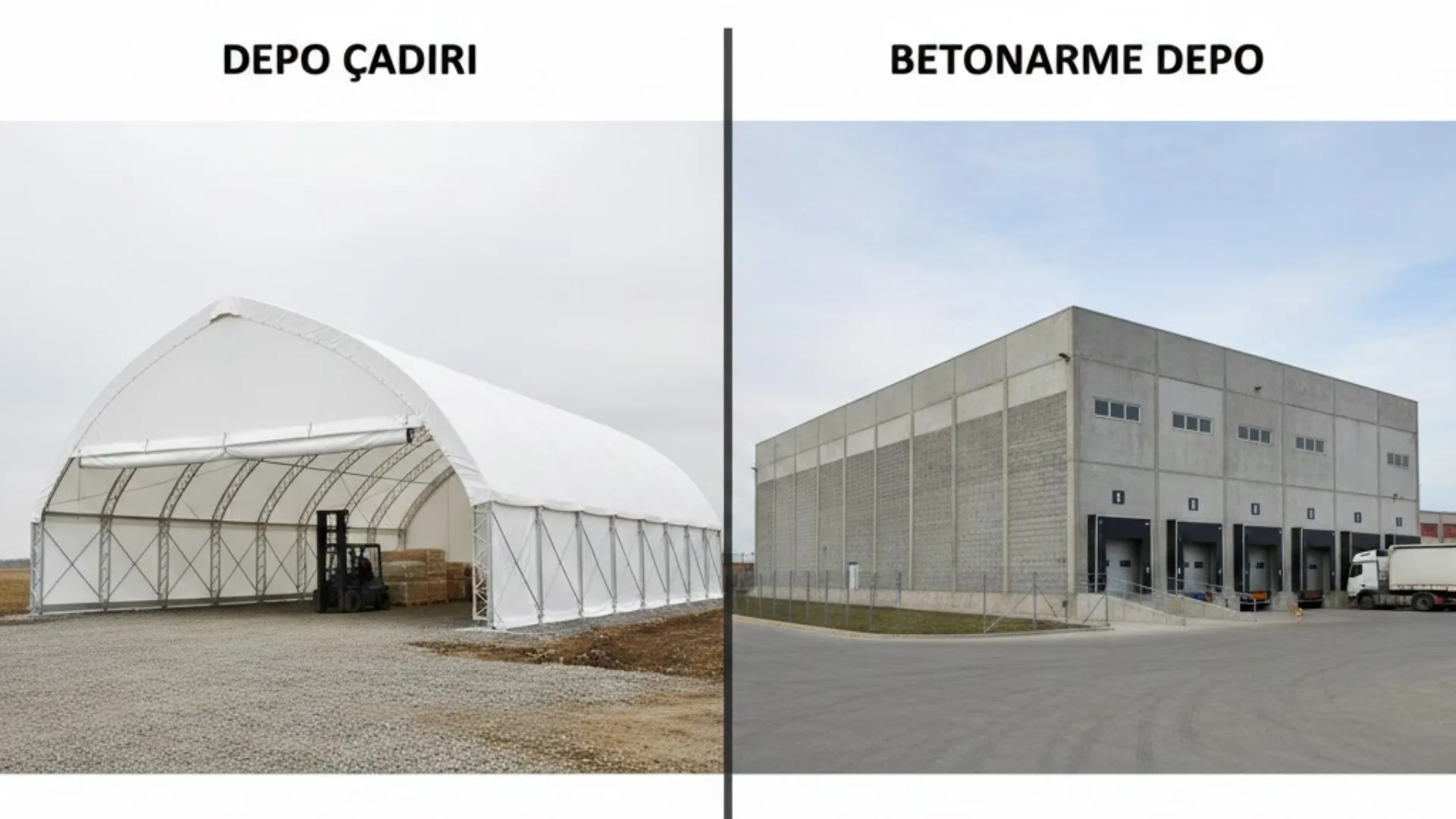
Warehouse Tent or Reinforced-Concrete Warehouse? When Each Makes Sense
We compare a warehouse tent and a reinforced-concrete warehouse on installation process, initial investment, extension, mobility and service life. You will find which businesses are better served by a tent and which by a concrete building, and what to ask before deciding.
-
Tent Tarpaulin Waterproofness: What Does a Water Column Rating (mm) Mean?
We explain how the "mm water column" value on tent fabric is measured, which standard it is based on and what it does not tell you. The article also covers PVC tarpaulin versus camping fabric, seams and joints, condensation and the points that are confused with IP codes.

-
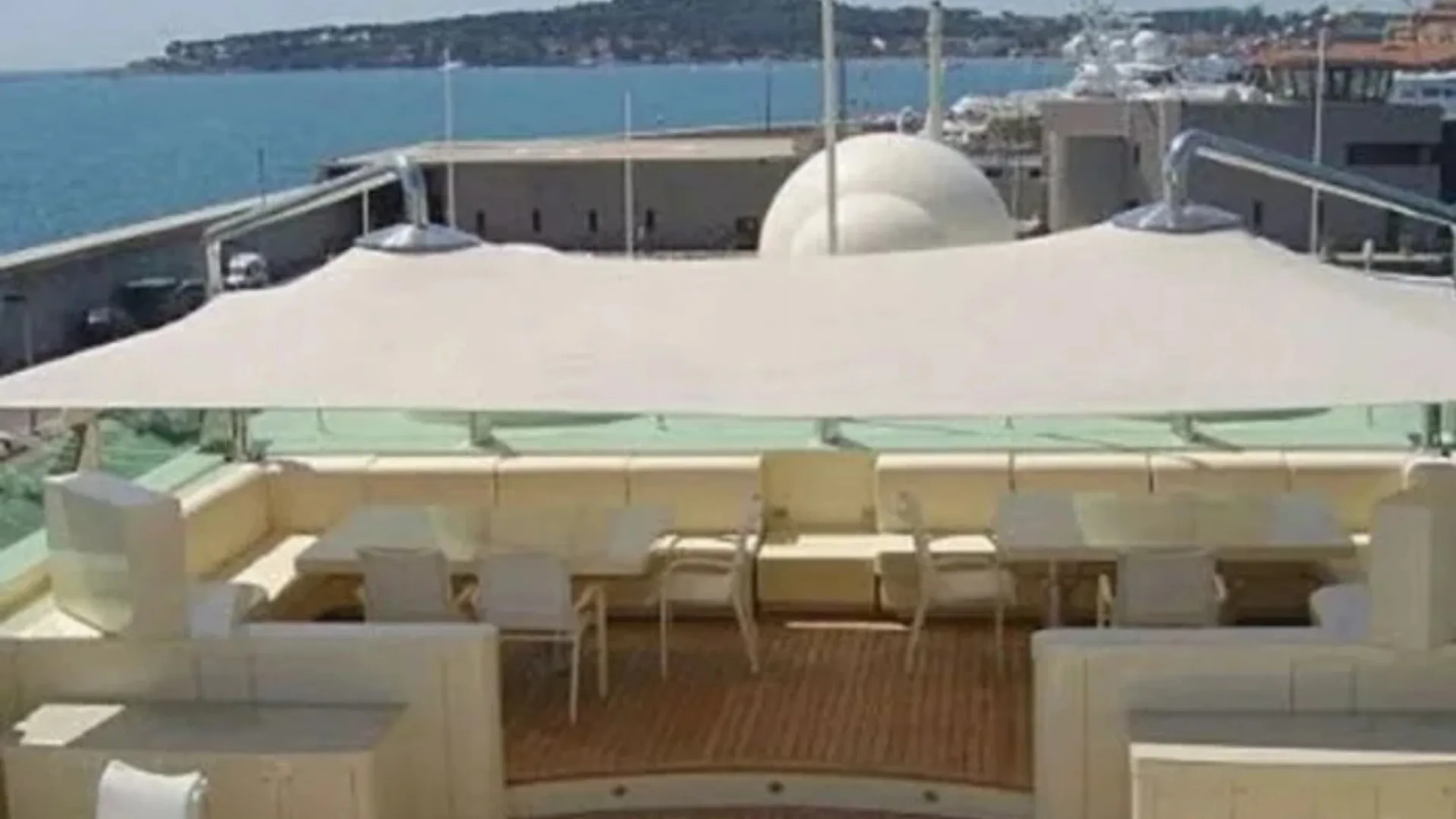
Yacht and Boat Covers: Choosing a Canopy, Boat Cover and Tarpaulin
What do a canopy (kapela), a boat cover and a boat tarpaulin do, and how do they differ? We explain what to look for in material, fit, fixing and ventilation to protect your boat from sun, rain, salt water and dirt.
-
What to Look for When Choosing an Industrial Tent Manufacturer
When comparing industrial tent manufacturers, look at what they can give you in writing rather than at spoken claims: the structural calculation, the project drawing, the tarpaulin datasheet and flammability document, steel and galvanising detail, the scope of the quote, the installation team and reference projects.

-
Livestock Tents in Cold Climates: Snow Load, Insulation and Ventilation
In cold, snowy regions, snow load, wind, insulation, ventilation and ground must be considered together when choosing a livestock tent. We explain the main differences between cattle, sheep and goat and poultry tents, and a common insulation mistake.

-
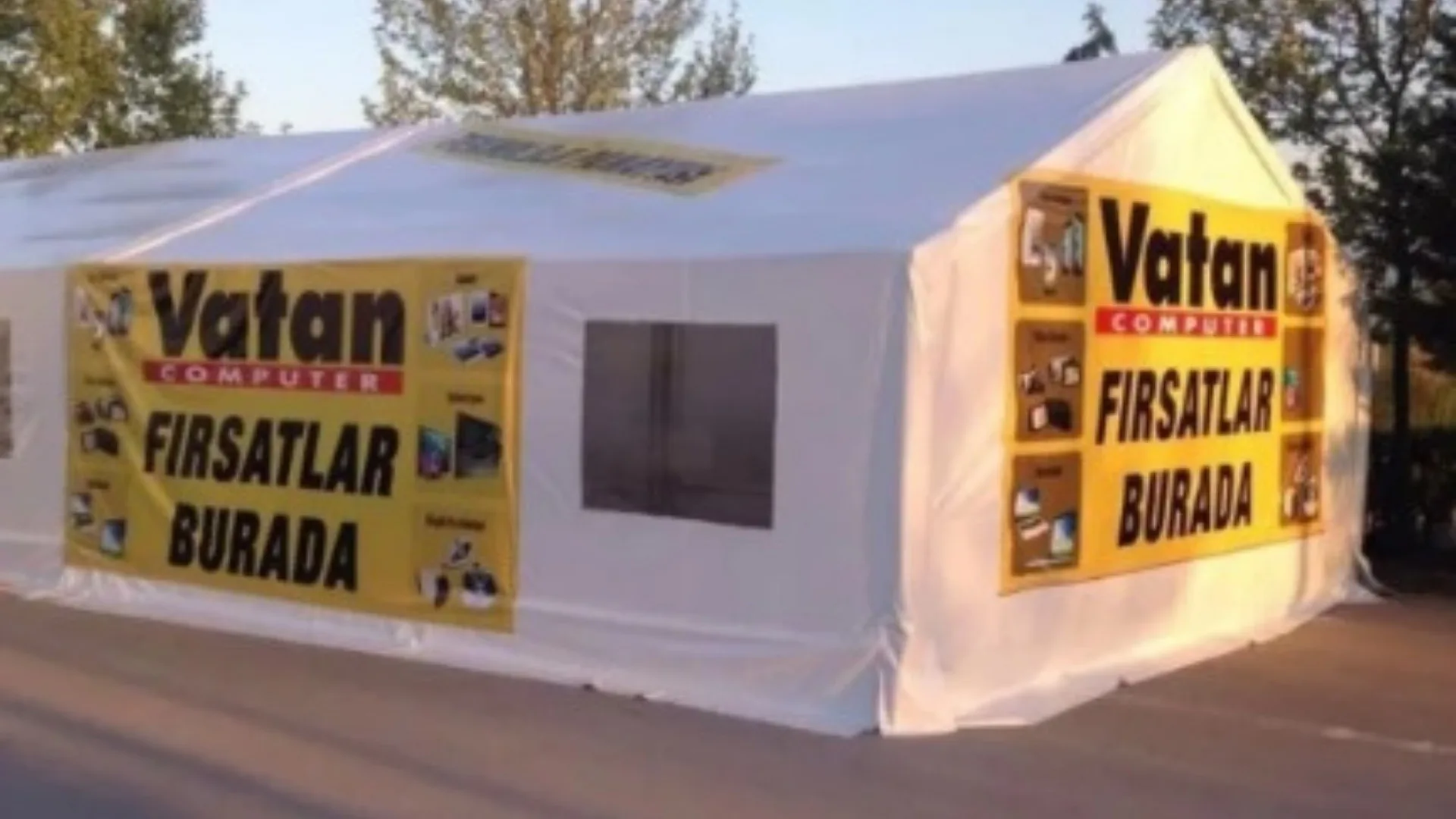
Outlet and Sale Tent Models: Which One Suits Which Campaign?
From a street sale to a factory outlet, different campaigns need different tents. We compare small accordion tents, event tents and large steel-frame sales tents by campaign length, area and weather.
-
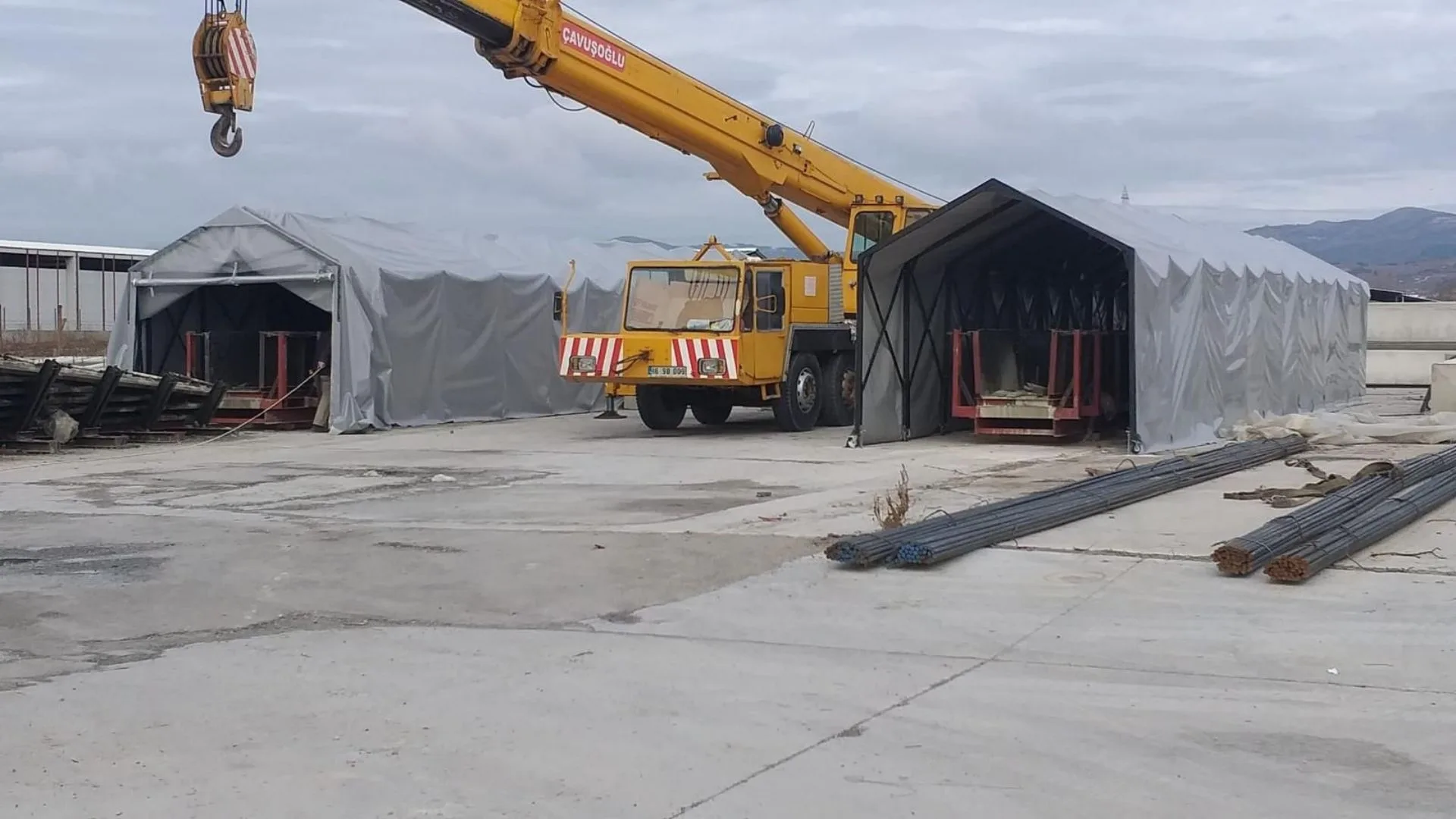
How to Choose an Accordion Tent: Size, Frame and Tarpaulin
"Accordion tent" is a name used for two different products: quick-opening folding tents with a scissor frame, and tunnel tents with bellows that run on rails or wheels. We explain step by step which one suits you, and how to choose size, frame, tarpaulin and fixing.
-
Easy-Setup Disaster Relief Tents: Selection, Site Preparation and Fast Installation
What speeds up tent installation after a disaster is not only the tent itself. This article covers what to look for in an easy-setup disaster relief tent, site preparation, the installation kit, team training, storage and maintenance.
No matching results.
Didn't find what you need?
Send us your question or your measurements and we will get back to you.