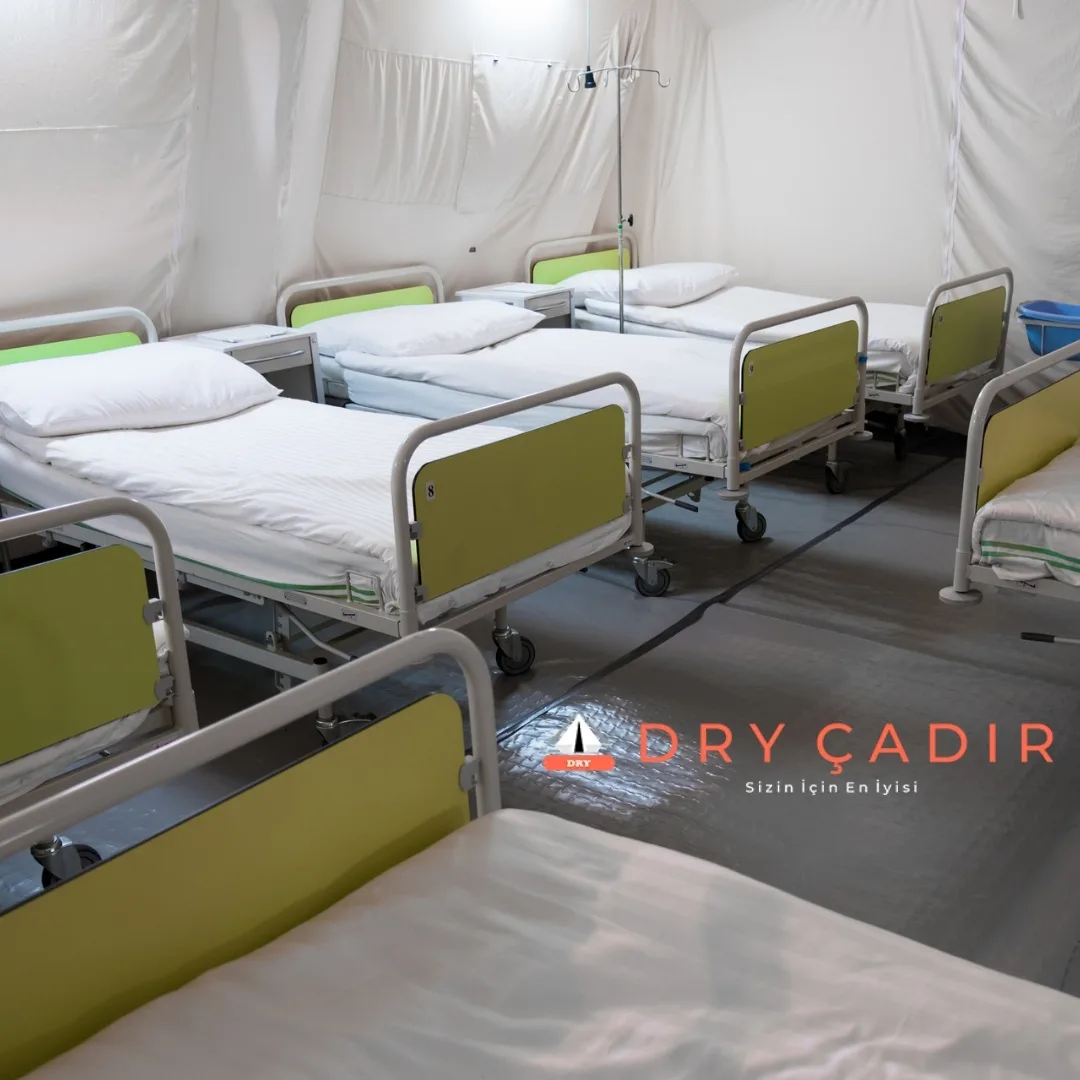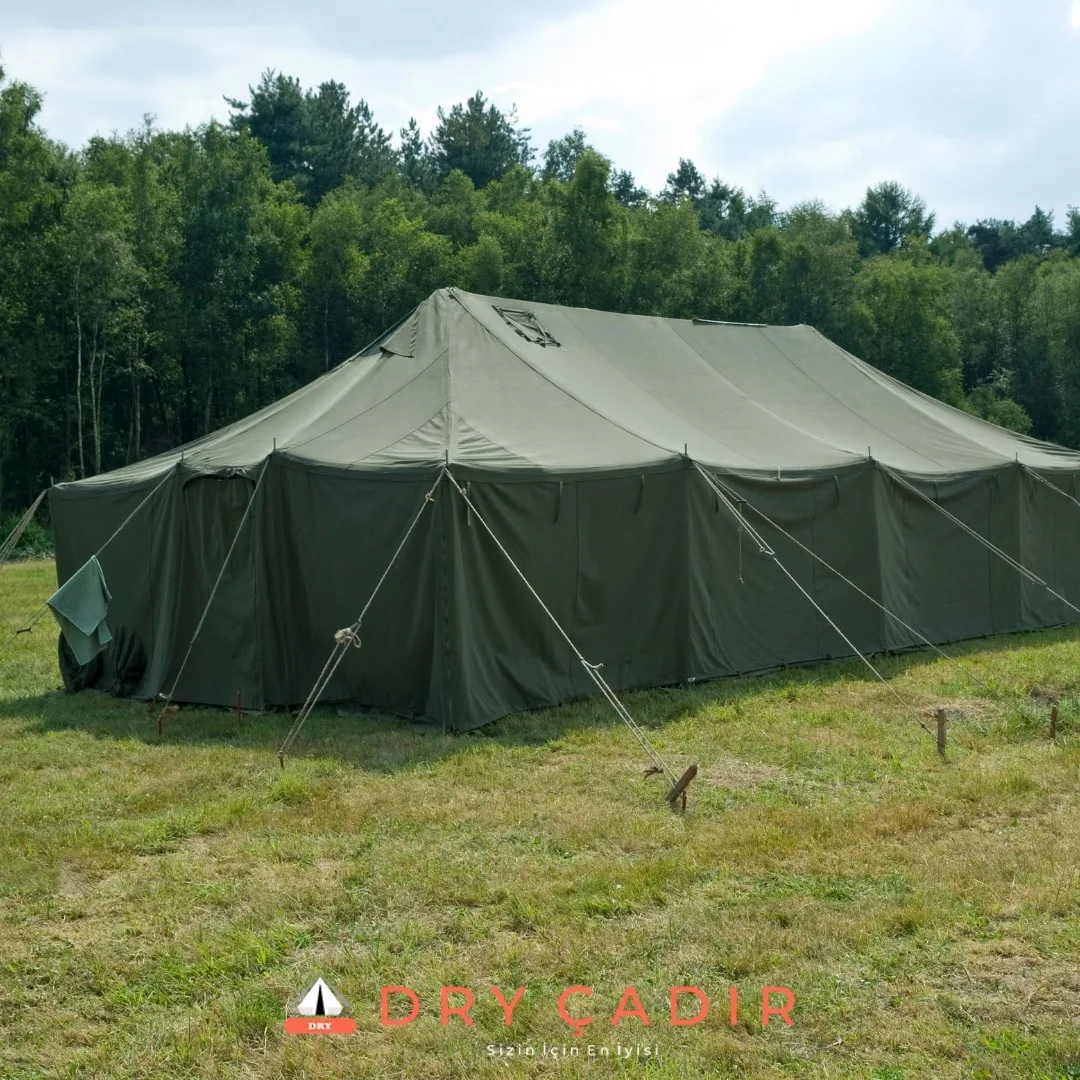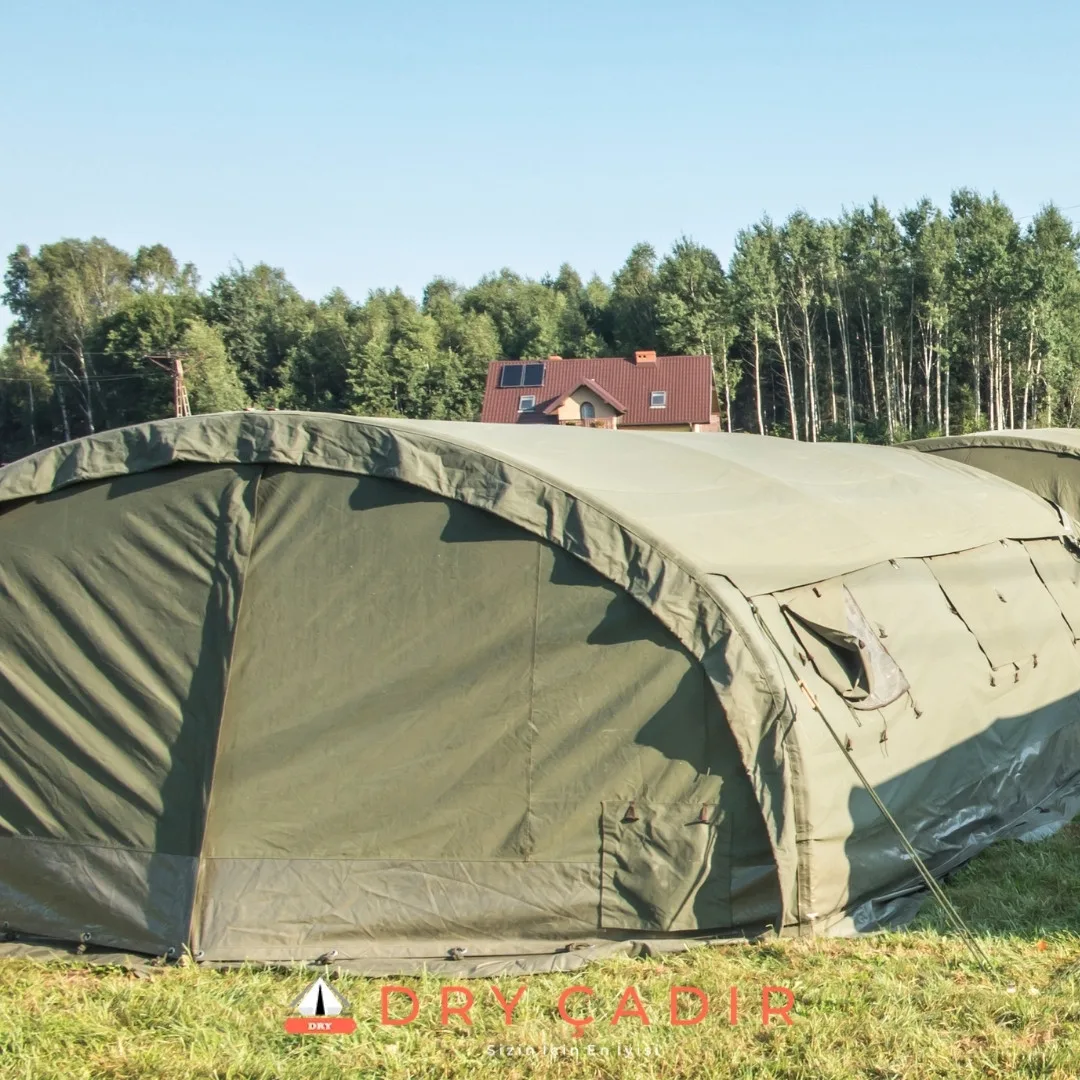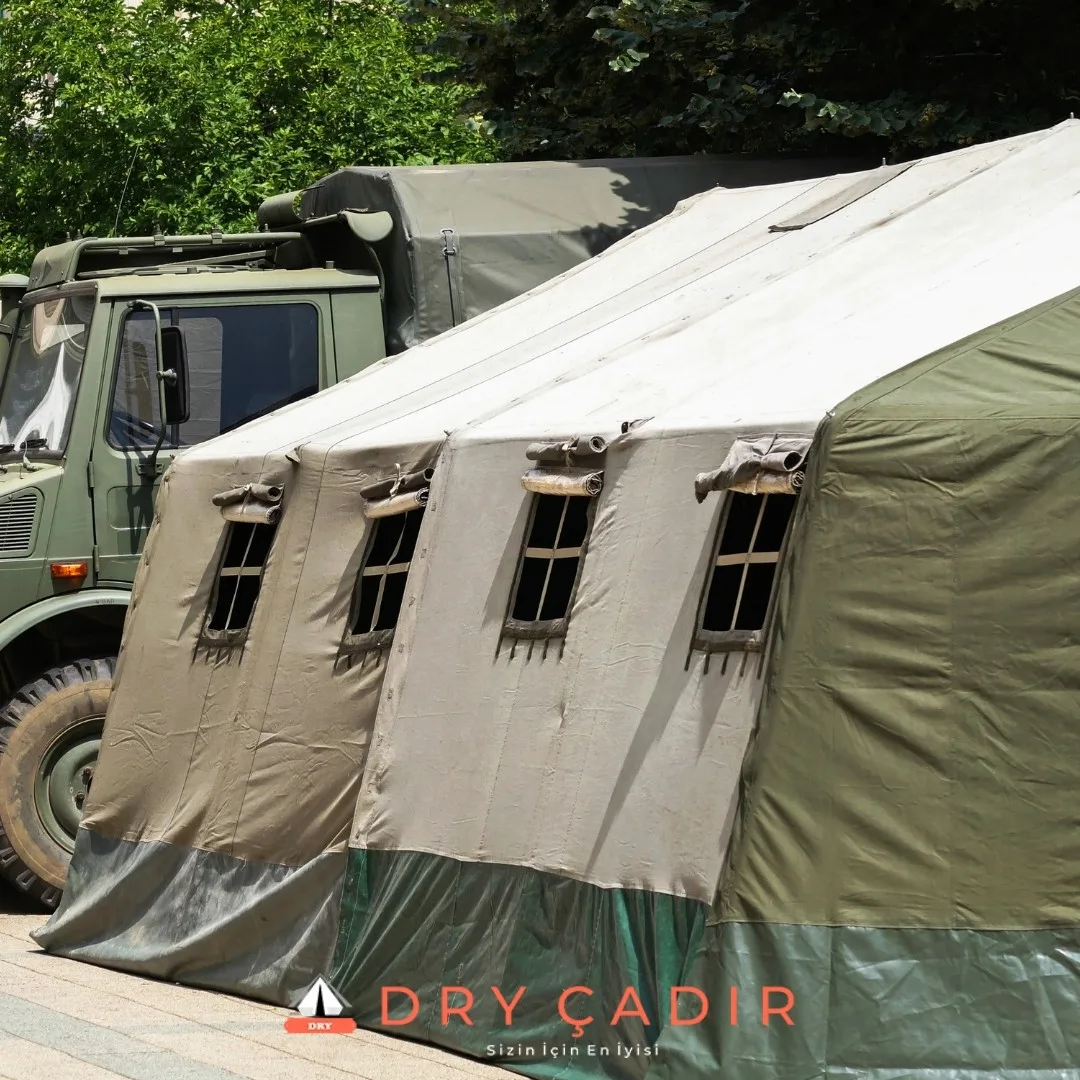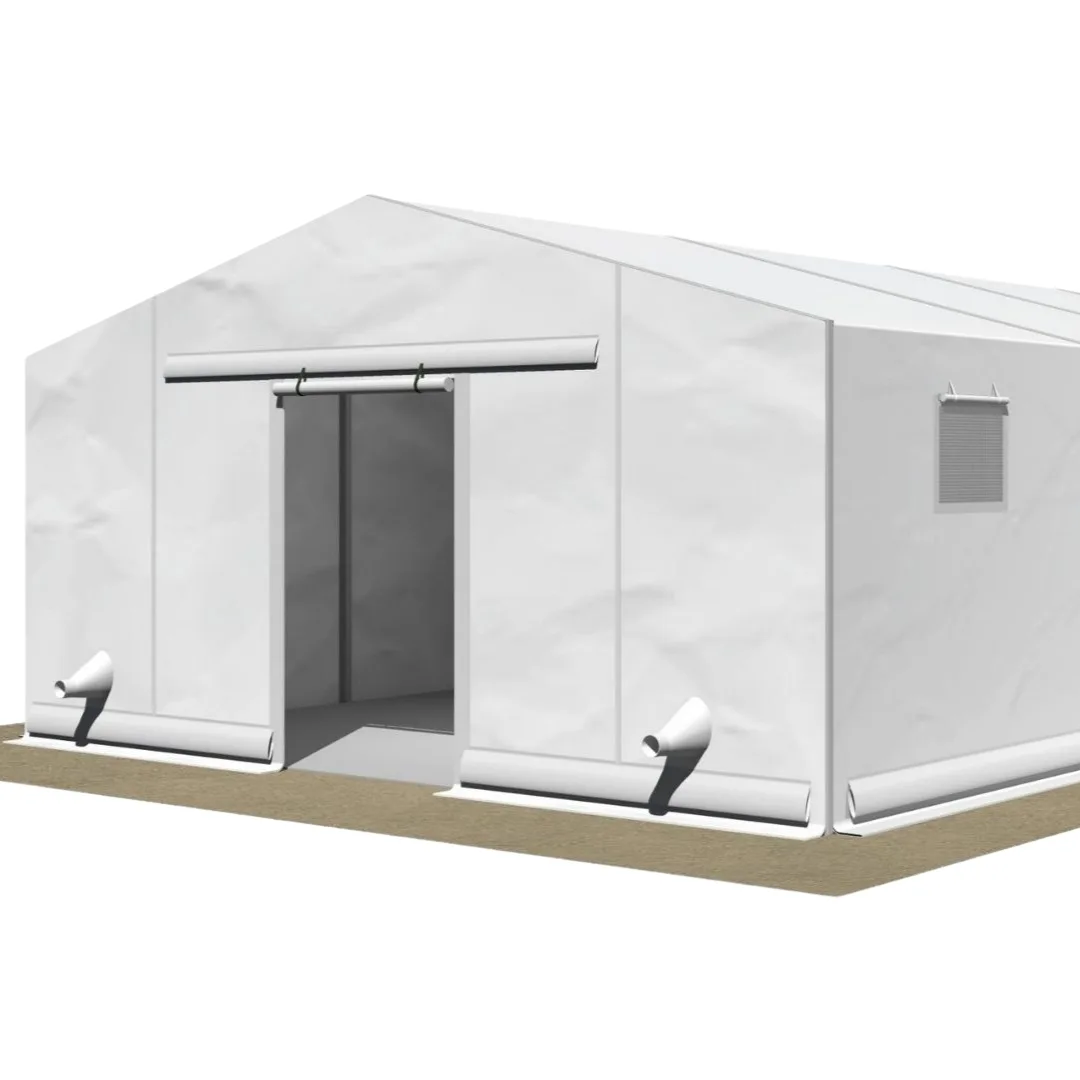
The emergency response tent is set up quickly on site after a disaster, and response teams work inside it. It is used as a response area for medical teams, a coordination point or a store where incoming supplies are collected. It is designed for work, not for shelter.
How it differs from a disaster relief tent
A disaster relief tent is a shelter unit where people stay. The emergency response tent is the area where teams do their work. So it has partitions, tables and equipment inside. Where needed, it is insulated for winter.
Which size suits which use?
| Size | Example use |
|---|---|
| 4×8 m | A small response or registration point |
| 5×10 m | A partitioned medical response area or a coordination desk |
| 6×12 m | A store for supplies and equipment, or a larger team |
If you need another size, we make it to the project.
Why fixing matters
A disaster site is often not flat or ready-made ground. Before installation we level the area and calculate the type and number of anchors for the ground and the wind load.
A tent erected without calculated ground anchoring becomes a hazard, along with the equipment inside, in the first strong wind.
Covering and climate
The covering is a waterproof PVC tarpaulin. Its weight is chosen between 650 and 900 g/m² according to how long the tent will be used. For use through the winter we add an insulation option. On request we supply DIN 4102 B2 (normally flammable) PVC tarpaulin. The test report from our supplier Kaya Plastik rates the tarpaulin as DIN 4102-1 class B2. A summary of the report is on our documents page.
In our article on easy-to-install disaster relief tents we explain what needs to be prepared on site to speed up installation.
The price is quoted according to size, profile thickness and insulation. Tell us how many tents you need, where they will be used and for what purpose, and we will design the project and prepare a quote.