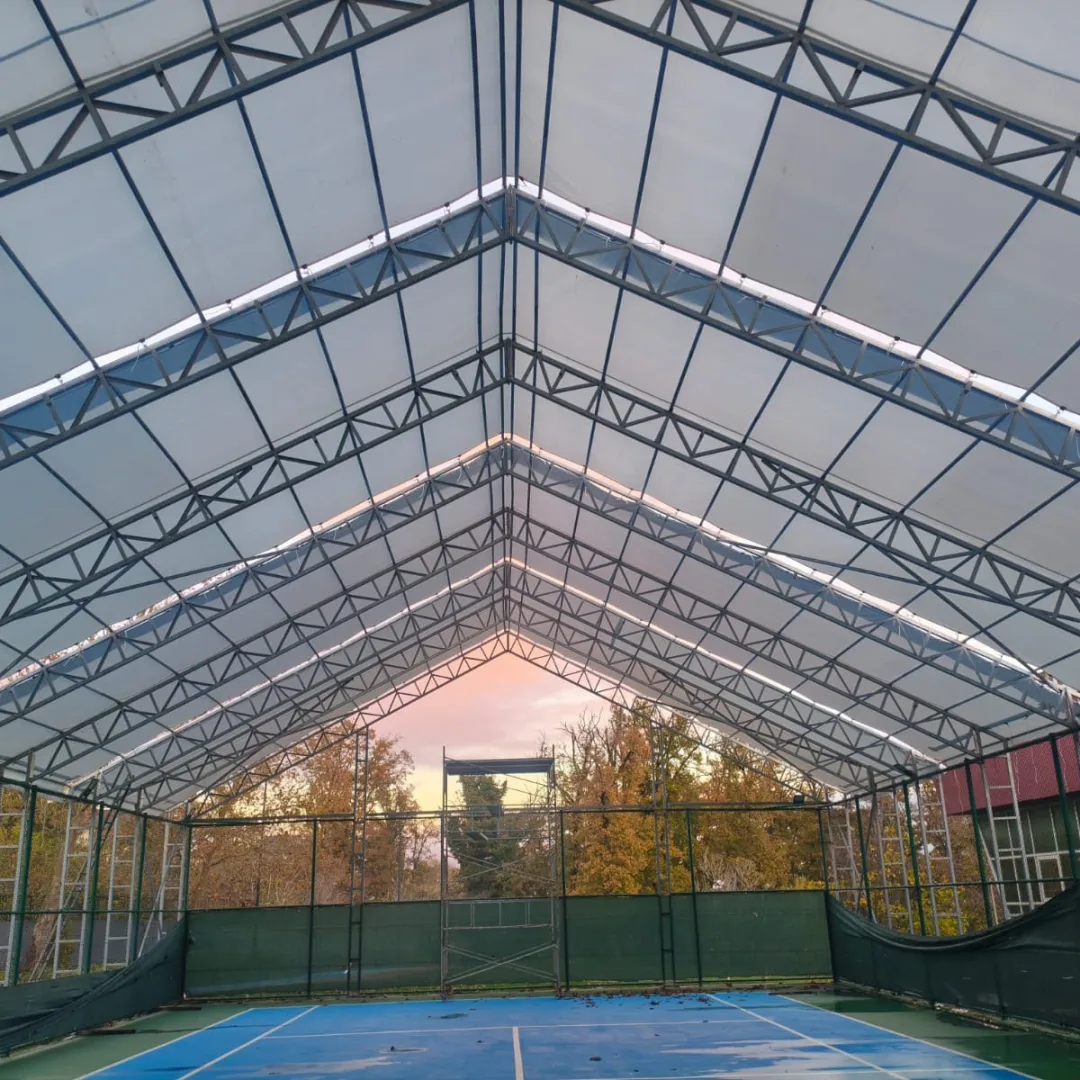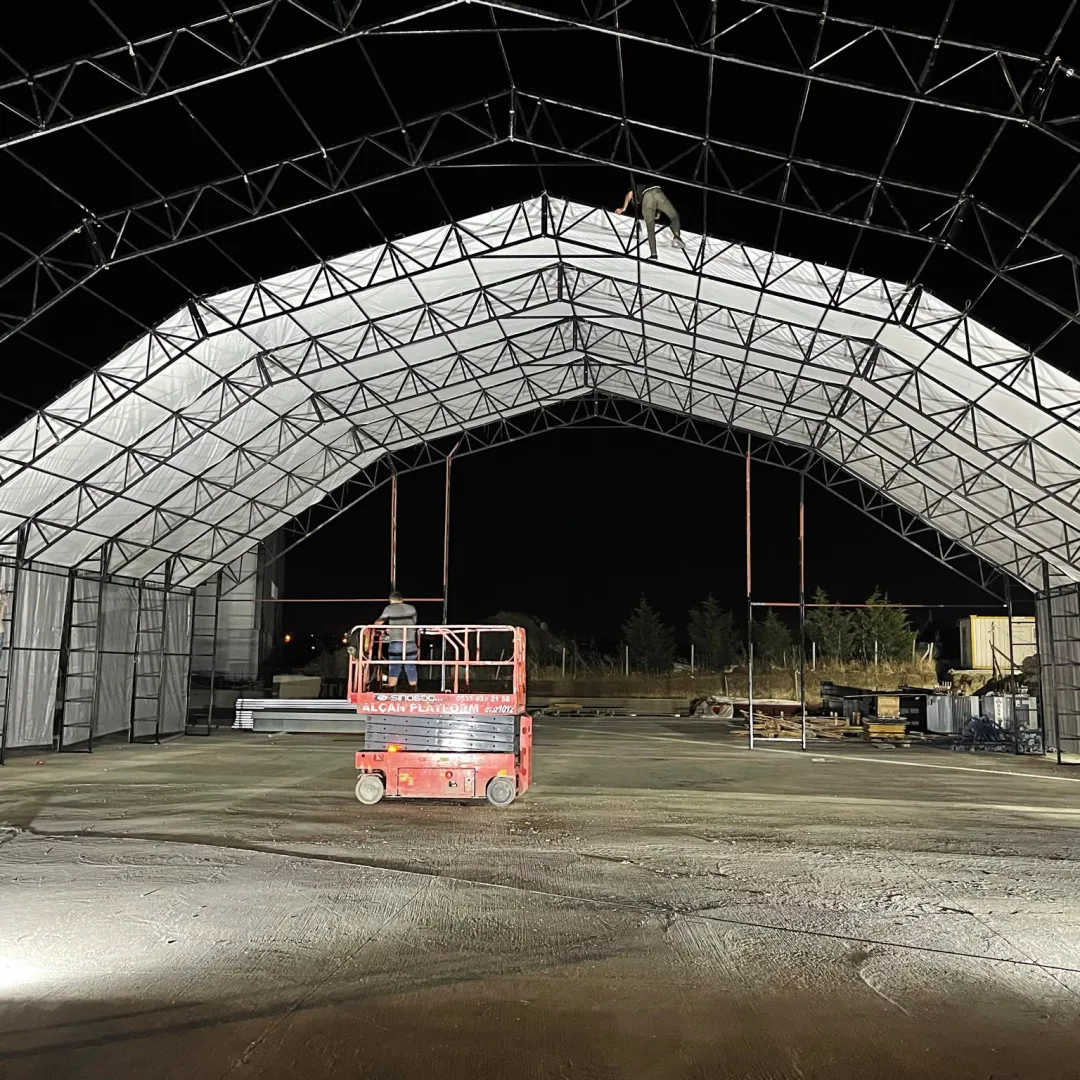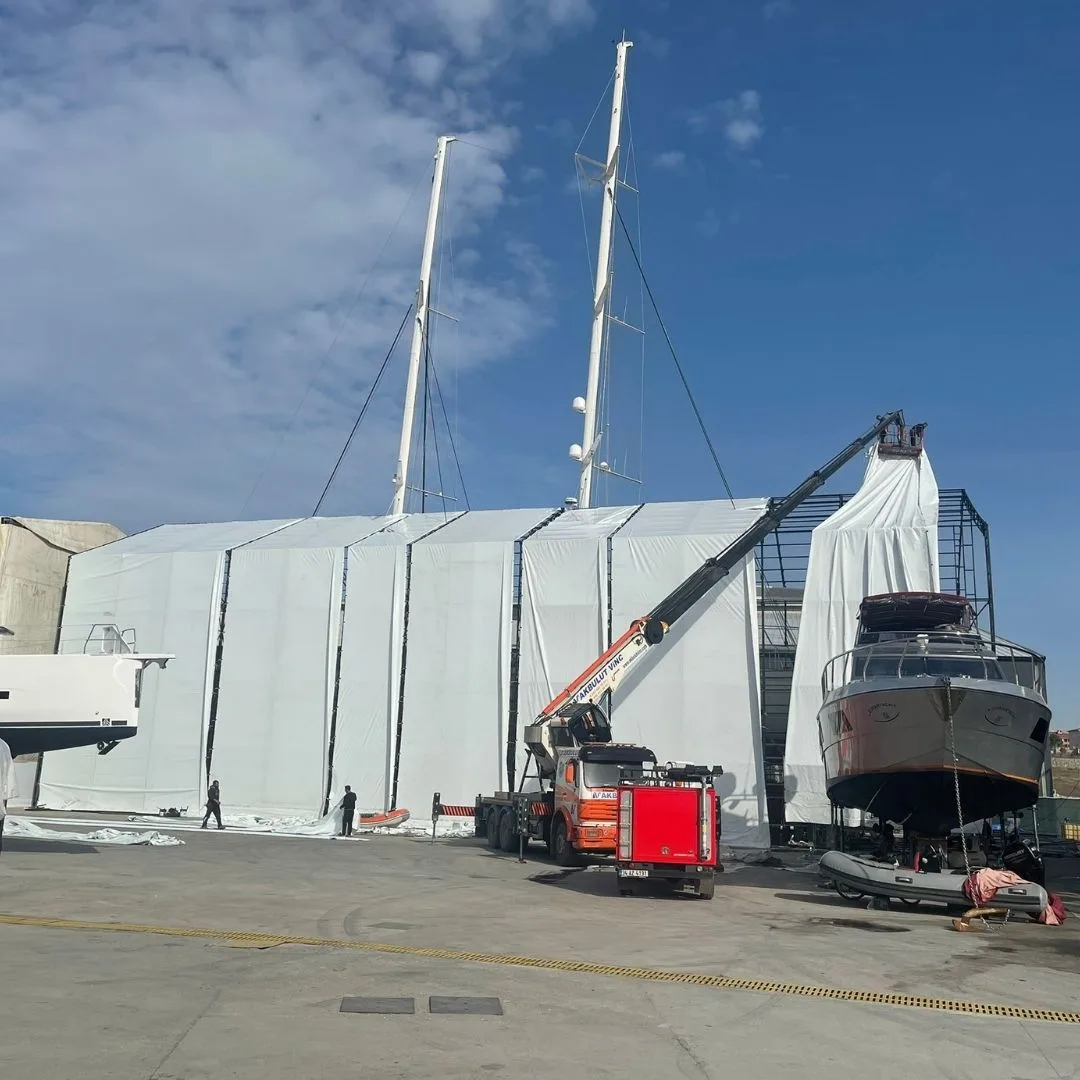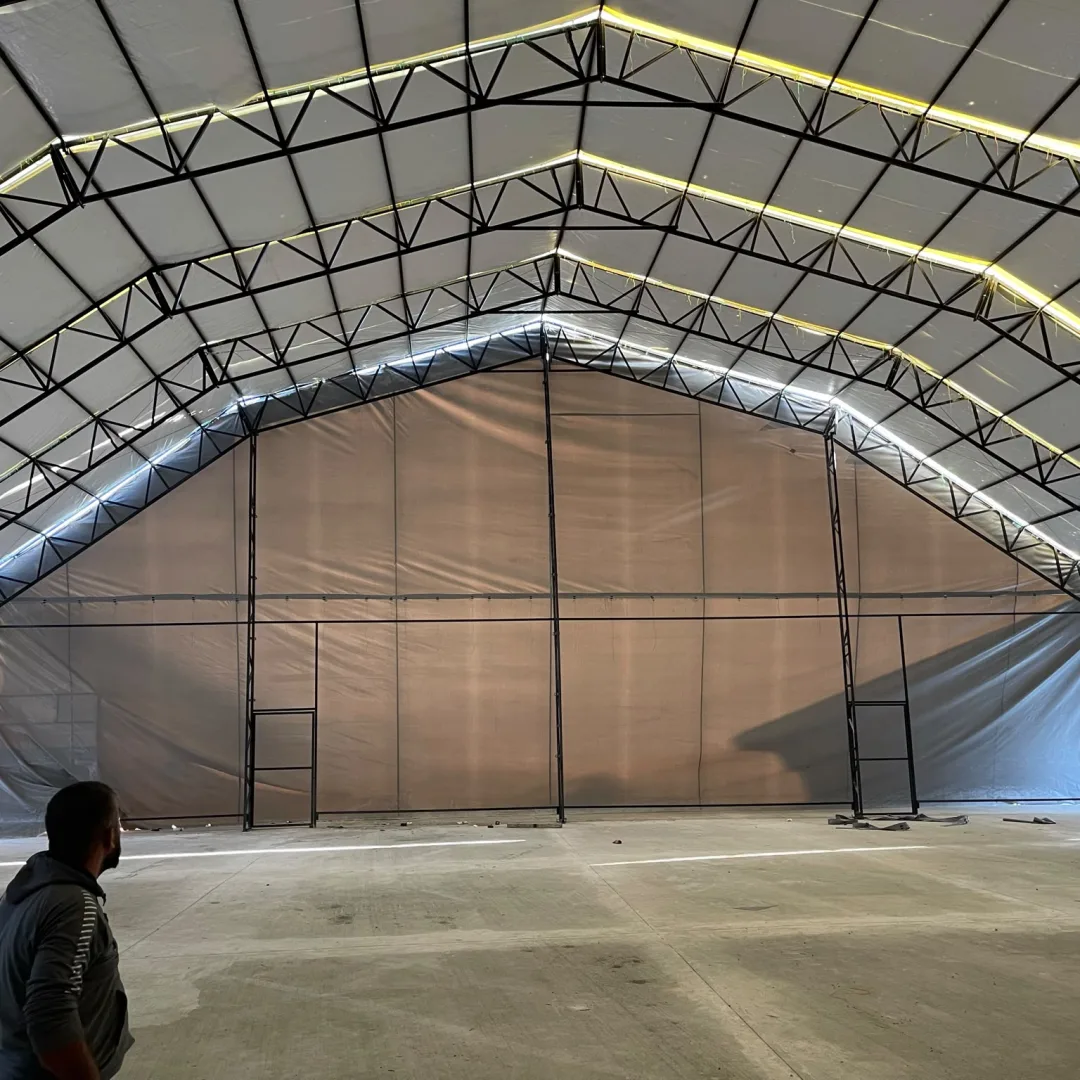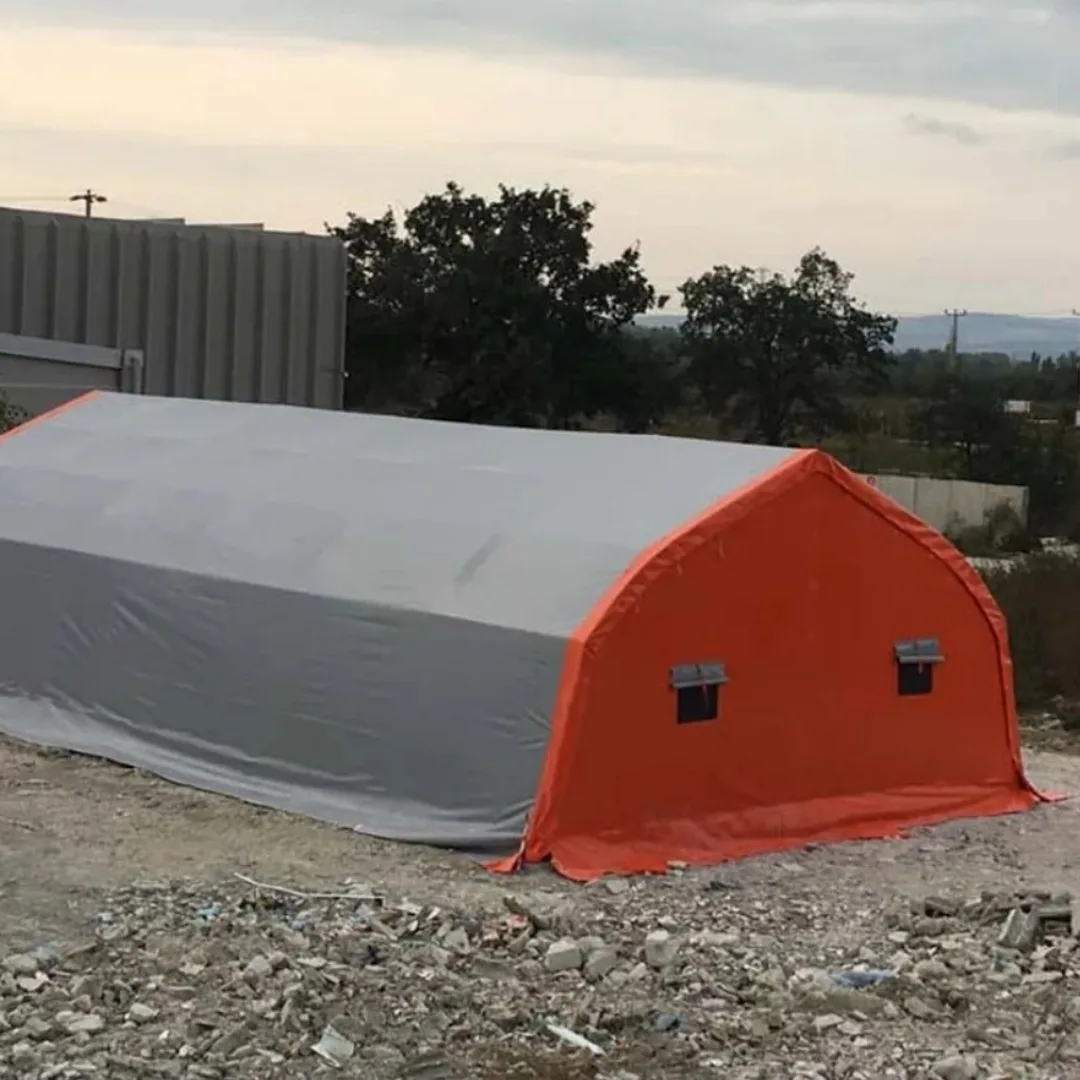
An insulated warehouse tent is a standard warehouse tent with an insulation layer added to the roof and walls. It stops the temperature inside from rising and falling quickly with the outside air. If the store is heated or cooled, it reduces energy loss. For businesses that stock products sensitive to temperature and damp, we choose the type of insulation to suit the use and the climate of the region.
What insulation options are there?
We work with three options: double-layer PVC membrane, rock wool and sandwich panel. Insulation thickness ranges from 40 to 120 mm depending on the project. Which one is chosen depends on the temperature to be kept inside, whether the tent will be heated and the winter conditions of the region. A store that only needs to soften sudden temperature changes and a stock area heated all winter do not need the same insulation.
Condensation: the overlooked side of insulation
When it is warm inside and cold outside, moisture in the air turns to water on the cold surface and can drip from the roof. So we do not base the insulation calculation on temperature alone. We also include moisture control, condensation risk and ventilation in the project. We cover the subject in detail in our article on condensation problems in industrial tents.
Insulation fitted without condensation control can turn into a damp and mould problem in the store over time.
Which products should it be considered for?
Insulation helps most for stock that is sensitive to damp: food, textiles, paper and packaging. Chemicals and technical materials, and feed and farm produce that must not freeze in winter, are in this group too. Some of these products can also be kept in a standard PVC warehouse tent. Insulation becomes necessary when temperature swings or damp start to harm the product.
Frame and fabric
In the insulated model too, the structure is galvanised steel and the outer cover is 650-1100 g/m² PVC fabric. The weight of the insulation layer is taken into account in the structural calculation together with the wind and snow load. On request we use PVC fabric in class DIN 4102 B2 (normally flammable). The test report from our supplier Kaya Plastik rates the fabric in class DIN 4102-1 B2. A summary of the report is on our documents page.
We give the price as a project-specific quote, based on the type and thickness of the insulation, the size of the tent and the structural load. Tell us the product you will store, the temperature you want to keep inside and the installation site, and we will choose the right insulation with you and prepare a quote.