
Summarize this article with AI Open a summary of this article in your preferred assistant
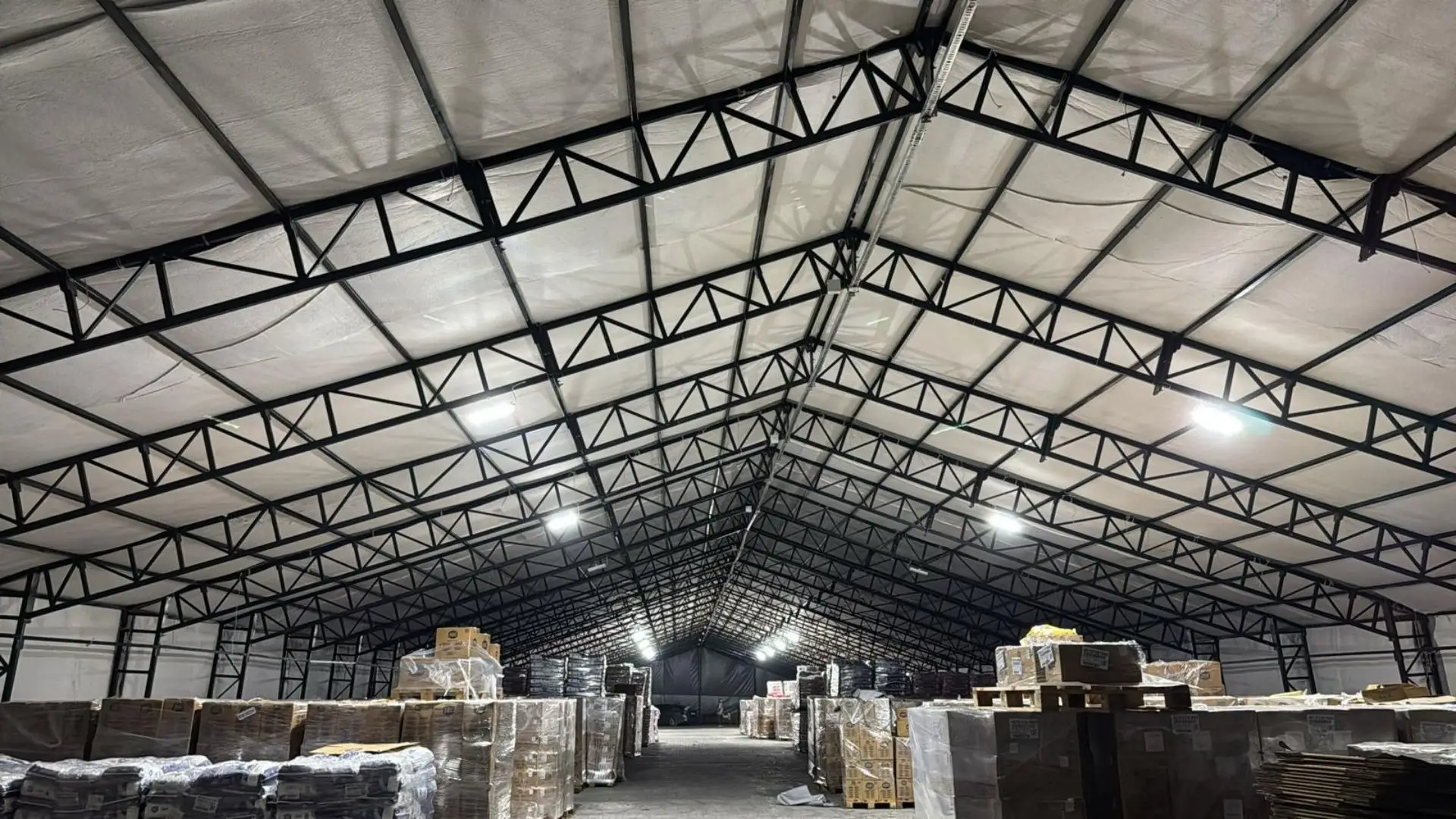
Lightweight construction is the general name for structures that use thin-section steel, aluminium profiles or membranes to carry the same load with less material weight. Light-gauge steel, modular and membrane structures and industrial tents belong to this group. A warehouse tent is included: because it is light, snow load governs the member sizes and wind governs the anchoring.
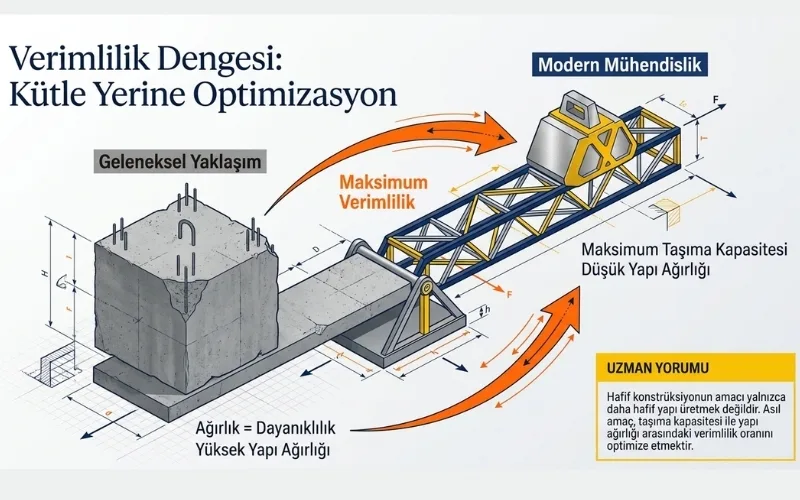
Lightweight construction is the general name for structures whose load-bearing system is built from low-weight elements such as thin-section steel, aluminium profiles or membranes. The aim is to carry the same load with less material weight. These structures go up faster than reinforced concrete, and most can be dismantled and moved elsewhere. They do not suit every job; span, snow and wind load and the intended use decide the choice.
Which building systems count as lightweight construction?
In practice, four building systems stand out: light-gauge steel structures, modular structures, membrane structures and industrial tents.
- Light-gauge steel structures: the load-bearing elements are thin-section galvanised steel profiles. They are used in housing, offices and small-scale industrial buildings.
- Modular structures: modules made in a workshop are joined on site. They are preferred for projects that need fast installation.
- Membrane structures: these are covered with PVC or technical textile. They can span large openings with little material.
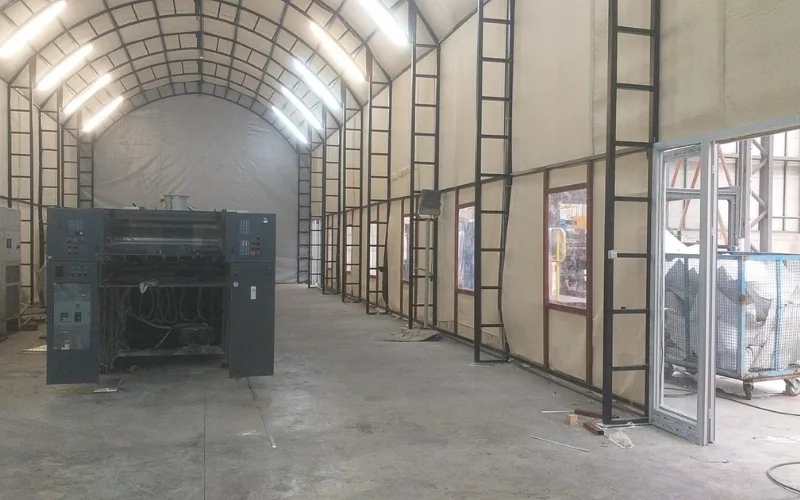
- Industrial tents: they combine a steel or aluminium frame with a PVC membrane cover. They are used for warehouses, production areas and logistics.
Is a warehouse tent lightweight construction?
Yes. A warehouse tent falls under lightweight construction because it combines a steel load-bearing frame with a PVC membrane cover. Still, not every tent is the same. The difference between an event canopy and a warehouse tent that will stay in place for years shows up in the structural calculation.
When you buy a tent to use as a warehouse, ask three questions. Was the snow load at the site taken into account? Were the wind load and anchoring calculated? Can this calculation be provided in writing? For our warehouse tents, we do the structural calculation according to the size of the structure and the region where it will stand.
Does being light mean being weak?
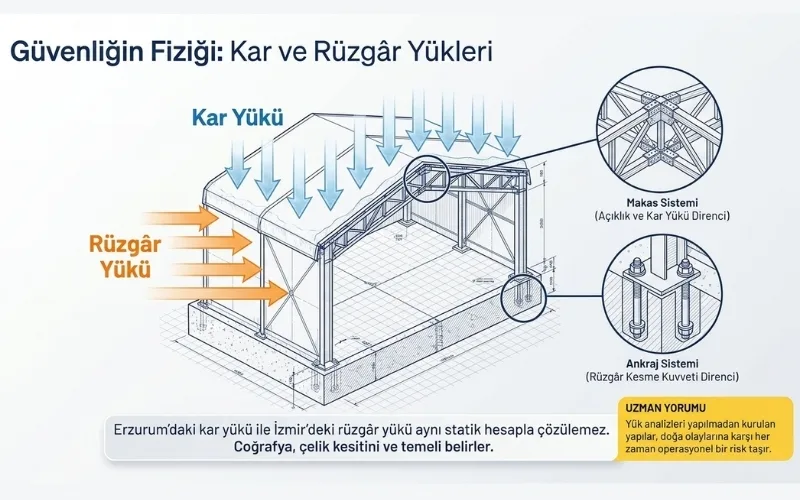
No, but the loads have to be handled differently. Snow load sits on the roof and sets the section size of the load-bearing profiles. Wind pushes the structure sideways and tries to lift the roof. A reinforced-concrete building resists this uplift with its own weight; in a light structure, that job falls to the anchoring.
In lightweight construction, it is the anchoring to the ground, not the weight of the structure, that resists wind uplift.
Snow and wind values change from region to region. A structure used in a high-snow-load province such as Erzurum or Kayseri is not designed with the same sections as one in İzmir or Mersin.
What is lightweight construction used for?
| Sector | Use | Why it is chosen |
|---|---|---|
| Logistics | Warehouse tent, dispatch area | Extra capacity in a short time |
| Production | Production Tent, Workshop Tent | Large column-free interior |
| Agriculture | Storage for produce and equipment | Use according to seasonal need |
| Construction | Site storage and work area | Can be dismantled and moved when the job ends |
| Aviation and large equipment | Hangar tent | Large span and high interior volume |
What these uses share is a quick need for enclosed space and a structure that may change later. If you plan a permanent, long-lived building, consider reinforced concrete or a permanent steel structure separately.
Lightweight construction or reinforced concrete?
The right answer depends on how long you will use the structure and what for.
| Criterion | Lightweight construction / warehouse tent | Reinforced concrete |
|---|---|---|
| Installation | Usually takes less time | Foundation and construction take longer |
| Structural weight | Low | High |
| Dismantling and moving | Possible in most systems | Not possible |
| Extension | Modular systems can be extended with additional modules | Needs new construction |
| Suitable use | Quick extra capacity, temporary or long-term storage, construction sites | Permanent building investment |
We cover the comparison of cost and service life in our article on a warehouse tent versus a reinforced-concrete warehouse.
Common mistakes when choosing
- Choosing a system without a snow load calculation
- Underestimating wind load and designing weak anchoring
- Starting installation without inspecting the ground
- Setting the sidewall height without considering rack height and forklift movement
- Placing doors at random rather than according to the operating flow
- Ignoring thermal expansion in long steel members
- Not discussing possible future growth at the start
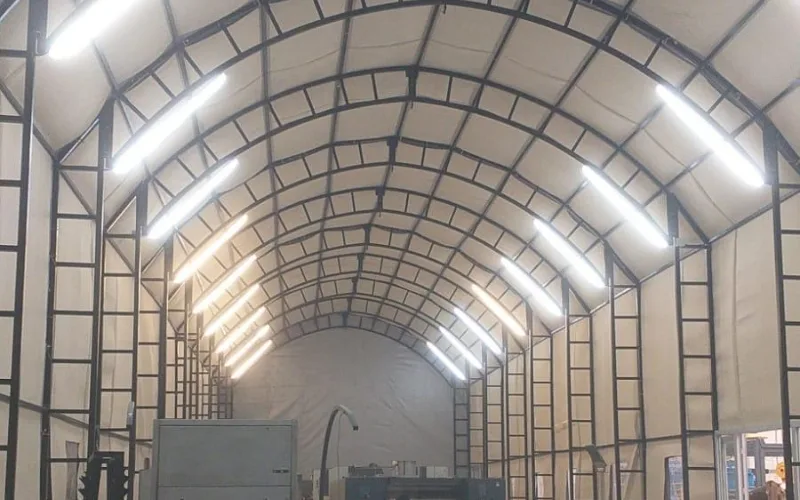
We draw our projects in SketchUp and AutoCAD and calculate the load-bearing system according to the size of the structure and the snow and wind conditions of the region. Write to us with the dimensions of your site and what you will store, and we will design a suitable system and prepare a quote. You can see our ready-made models on our warehouse tent page.