
Summarize this article with AI Open a summary of this article in your preferred assistant
When choosing an accordion tent, first decide which type you need: a scissor-frame folding tent for stands and events, or a tunnel tent that opens and closes like bellows for vehicle and workshop entrances. Size follows the vehicle and the use, the frame follows how often it is moved and the load, and the tarpaulin follows where it is used. Outdoors, fixing it down is essential.
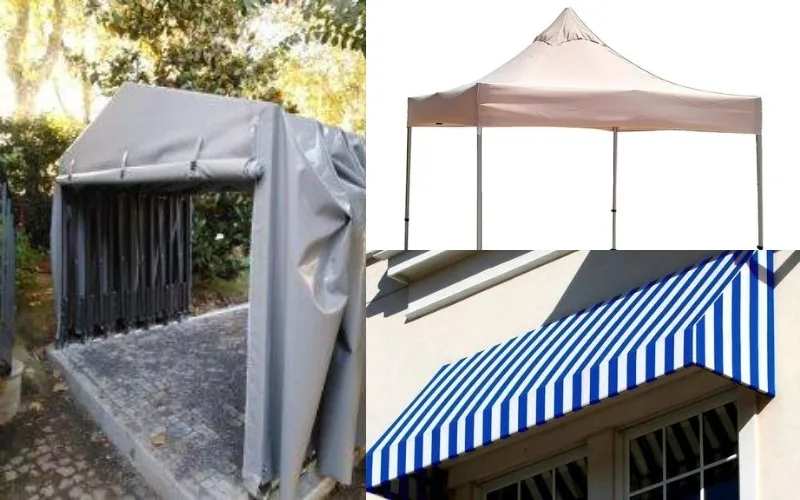
The first question when choosing an accordion tent is which type you need, because the name covers two different products. The first is a folding tent that opens in a few minutes on a scissor frame, for fairs, stands and short events. The second is a tunnel tent that opens and closes like bellows in front of a workshop, warehouse or truck loading area. Once the type is clear, choosing the size, frame, tarpaulin and fixing is easier.
Two types of accordion tent
Scissor-frame folding tent
A tarpaulin stretched over a four-legged scissor frame. When the legs are opened the frame expands as one piece; when it is closed it packs small enough to fit in a bag. It is used for stands, sales points by the till, reception areas and short events. 3×3 accordion tents, 2×2 models and folding fair tents belong to this group.
Bellows (accordion) tunnel tent
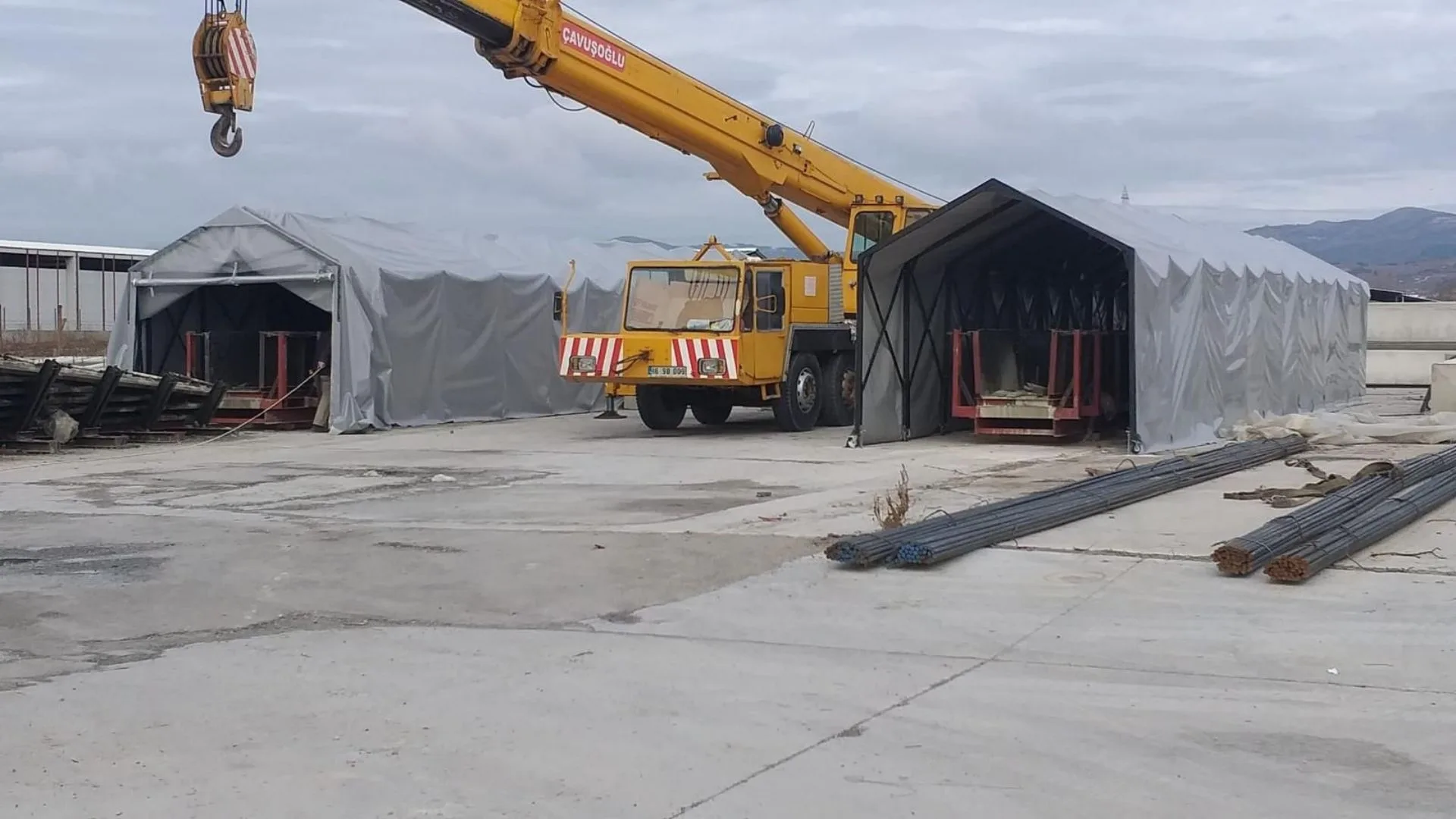
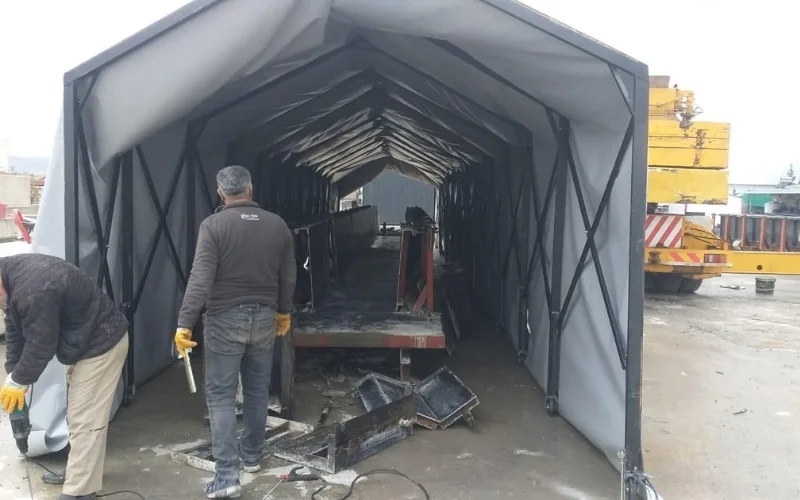
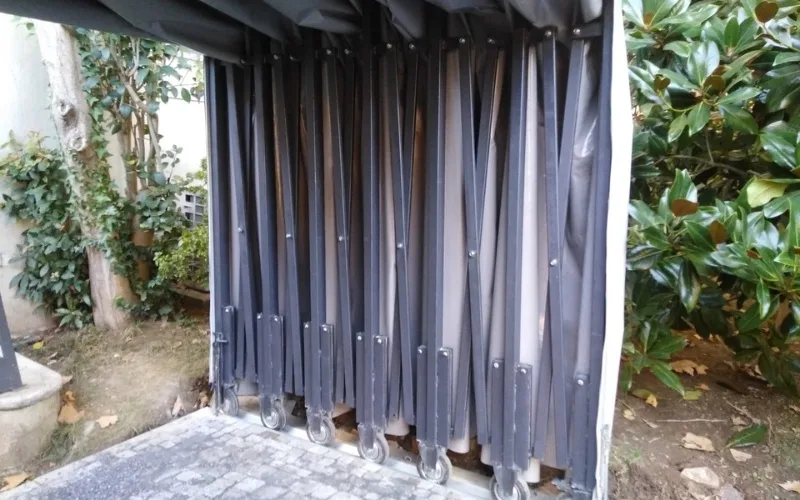
A tarpaulin stretched over a series of arches or frames set one behind another. The frames move closer together or further apart on rails or wheels; when the tent is closed it collapses like bellows. It is used for workshop and warehouse entrances, vehicle maintenance areas, material protection and temporary covered walkways. For systems that work on a similar principle, see also our bellows awning page.
First decision by purpose of use
- Short event or stand: a light scissor-frame folding tent that opens quickly, since it will be moved often.
- In front of a cafe, restaurant or shop: if it will stay in one place for a long time, a tent that can be firmly fixed down, with the option of clear-panel side walls.
- Workshop, warehouse, truck loading area: a tunnel tent with a steel frame that opens and closes on rails or wheels.
Whatever the type, three facts decide the choice: how often the tent will be opened and closed, what weather it will be used in, and the ground it will stand on (concrete, asphalt, earth).
How is the size determined?
For a folding tent, the size is chosen from the stand area and the tables, shelves or products that will stand inside. For a tunnel tent, the vehicle or machine that will go inside decides. The width must let the vehicle pass through the opening comfortably; if forklifts will enter and leave, their turning space must also be allowed for. The height must leave a safe clearance above the tallest vehicle or load. The length of a tunnel tent is set by the number of frames, and the space the tent takes up when closed should also be written into the plan.
Frame: aluminium or steel?
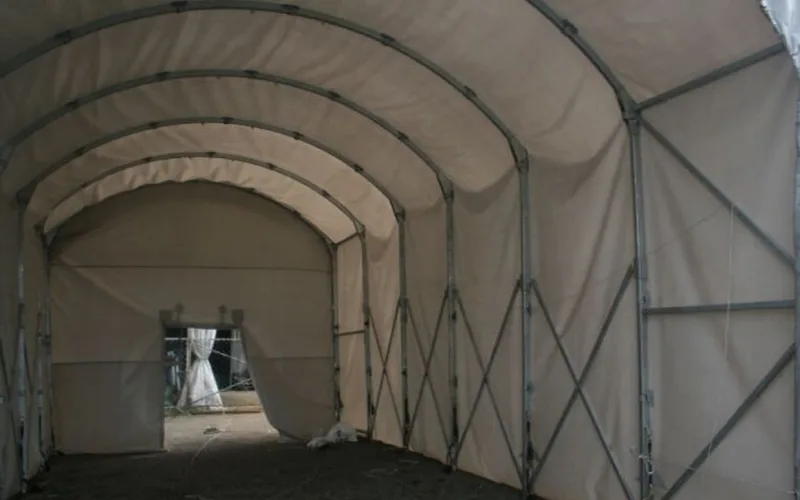
An aluminium frame is light, which makes carrying easier for folding tents that are moved often and set up for short periods. A steel frame is heavier, but it is preferred for permanent use and for tunnel tents under heavy load, and it is easy to repair when damaged. Profile size and wall thickness are set by the size of the tent and the wind and snow load at the site.
The movement system is another choice for tunnel tents. On a rail system the frames always slide smoothly along the same line, but rails must be laid in the ground. A wheeled system needs no rail and is more flexible; it needs a flat, solid floor.
Tarpaulin
For accordion tents that will be used outdoors for a long time, we prefer PVC-coated polyester tarpaulin; it is waterproof, resistant to abrasion and easy to clean. The weight (g/m²) is chosen for the size of the tent and how often it is used. Clear PVC panels can be used where light is wanted. On request, PVC tarpaulin of class DIN 4102 B2 (normal flammability) is used; the document is available on request.
Fixing and installation
The hardest test for an accordion tent is windy weather. Because folding tents are light, the legs must be weighted or pegged at every setup. On tunnel tents the fixed end frame is anchored to the ground, and the locks and wind ties of the moving frames are checked in both the closed and the open position.
However briefly an accordion tent will stay up, it must be fixed down at every setup. What keeps a light tent in place in the wind is the weight or peg tied to its legs.
What sets the price?
The price of an accordion tent varies with its size, frame material and profile thickness. The tarpaulin weight and type, and the rail or wheel system, also affect it. Extras such as clear panels, doors and printing, and the place of installation, show up in the price too. For this reason we give the price as a quote based on the project.
Maintenance for a long life
- Clean the tarpaulin regularly, and do not fold and store it wet.
- Clear snow that builds up on the roof in winter.
- Check the scissor joints, rails, wheels and locks from time to time.
- Repair small damage at seams and connection points before it grows.
What we need for a quote
- Which type you want: a folding tent or a bellows tunnel tent
- Place of use and ground type
- The size you want, or the vehicle, machine or layout that will stand inside
- How often it will be opened and closed, and whether it will be moved
- Need for clear panels, doors or printing
All models are on our accordion tent page. Write to us with the place of use, the vehicle or layout that will go inside and the size you want, and we will recommend the right type and prepare a quote.