
Summarize this article with AI Open a summary of this article in your preferred assistant
An iftar tent project starts with a drawing of the table and service layout, and the tent size comes from that drawing. The load-bearing frame is calculated for the wind and snow load at the site, and the anchoring is chosen to suit the ground. Tarpaulin, ventilation, electricity, emergency exits, transport and dismantling after Ramadan should also be planned from the start.
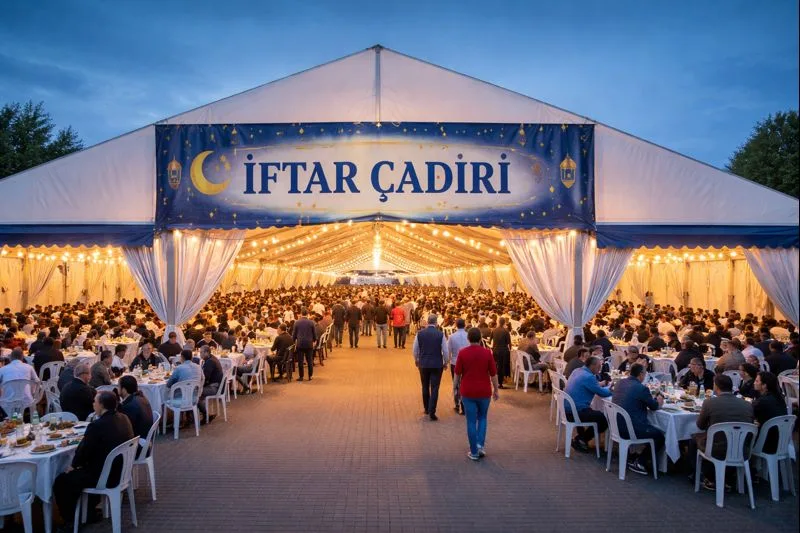
Whether an iftar tent is safe and comfortable is decided long before installation day. The iftar is the meal that breaks the fast at sunset during Ramadan. Plan together how many people will sit, what ground the tent will stand on, the wind and snow conditions of the region, the kitchen and service layout, and transport and dismantling. Below, in order, are the points that municipalities, foundations and institutions should settle before the project.
The size comes from the table layout
The number of guests alone does not set the area of an iftar tent. The same plan must show the table type, the spacing between rows, the aisle for service trolleys, the area where hot food is served, washbasins and hand-washing points, and the entrances and exits. For this reason we draw the layout in SketchUp and AutoCAD and take the tent size from that drawing.
In the iftar tents we installed for the municipalities of Afyon and Bergama (towns in Türkiye), the usable area of the square and the table layout set the size.
Wind and snow load: the season of Ramadan changes
Iftar tents are mostly set up in places exposed to wind, such as squares, parks or open car parks. We calculate the load-bearing frame structurally for the wind and snow values of the region where it will stand. We do not use a fixed value that claims to fit everywhere.
Ramadan moves about eleven days earlier in the calendar each year. An iftar tent set up in summer heat today may face snow load in winter a few years from now.
This is why the snow load calculation, the roof pitch and the profile choice matter. If you plan to use the tent for several years, say so at the start so that the calculation covers the likely conditions of several seasons.
Ground and anchoring
On most town squares the ground is paving stone, concrete or asphalt. The anchoring method is chosen to suit the ground. Where drilling into the ground is not allowed, the fixing method must be agreed with the institution that owns the site. If the site slopes, or rainwater collects at one point, this needs to be seen at the site survey.
Tarpaulin, light and interior climate
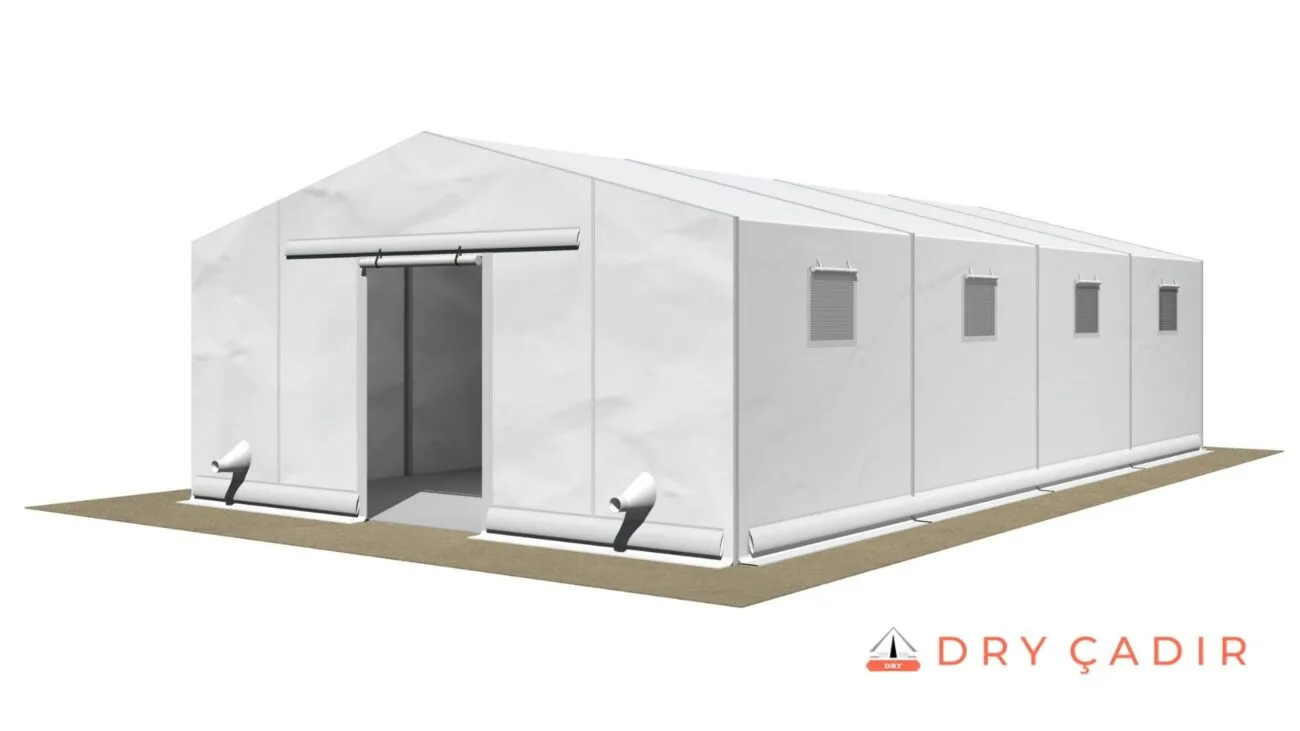
We cover our tents with PVC-coated polyester tarpaulin between 650 and 1,100 g/m²; the weight is chosen to suit the project. On request we use DIN 4102 B2 class PVC tarpaulin (normally flammable); the document is available on request.
A large crowd and hot food quickly build up humidity and heat in an enclosed space. As the air cools in the evening, this moisture can condense on the inside of the tarpaulin. Discuss the position and number of ventilation openings and any need for insulation in the project. You will find the causes of condensation in detail in our article on condensation problems in tents.
Electricity, heating and kitchen
The total electrical load of lighting, the sound system, heaters and kitchen equipment must be calculated in advance, and a licensed electrician should install the wiring. Heaters and cooking equipment should not be placed close to the tarpaulin surface. Whether the food is prepared inside the tent or in a separate area next to it also changes the plan.
Entrances, exits and the crowd
At iftar time people arrive all at once and leave within a short time. Entrances and exits should be separate, and emergency exits should stay clear regardless of the table layout. The number and width of the doors should follow the rules required by the local fire brigade and municipality.
Transport, installation and after Ramadan
The logistics plan should cover the following:
- How close the vehicle carrying the material can get to the installation area.
- The hours when installation will affect traffic and neighbouring businesses.
- The location of the electricity and water connection points.
- When the tent will be dismantled after Ramadan and where the material will be stored.
Because our tents are modular, they can be dismantled, stored and set up again the next year. How many days installation takes is covered separately in our article on urgent iftar tent installation for Ramadan.
Who checks what during Ramadan
The tent hosts a crowd every evening for a month. Set up a simple inspection routine for that period:
- Check tension, connections and anchor points by eye at regular intervals.
- Decide in advance who will close the tent to use when a strong wind or snow warning is issued.
- Do not block doors and emergency exit routes with tables, chairs or service equipment.
- Protect electrical cables that cross walkways and keep them dry.
What to prepare for a quote
- The address of the installation site and, if possible, the dimensions and photos of the area
- The expected number of guests and your preferred table layout
- Whether the kitchen will be inside or outside the tent
- Installation and dismantling dates
- The type of ground and whether it can be anchored
Send us the site, the number of guests you expect and the dates of use. We will draw the layout and prepare a quote.