
Summarize this article with AI Open a summary of this article in your preferred assistant
A canopy (kapela) covers the cockpit or upper section of a boat; boat cover and boat tarpaulin describe protective covers that wrap the boat more widely or completely. When choosing, UV- and salt-water-resistant material, a made-to-measure fit, a shape that does not collect water, secure fixing and ventilation decide the result.
Yacht and boat covers protect the deck, upholstery and equipment of a boat waiting at its mooring or in winter storage from sun, rain, salt water and dirt. A well-chosen cover fits the boat exactly, does not collect water, stays in place in the wind and does not trap moisture underneath. A cover that fails these four conditions can damage the boat it is meant to protect.
Canopy, boat cover, boat tarpaulin: what is the difference?
These names are used interchangeably in everyday speech, but they usually describe the following:
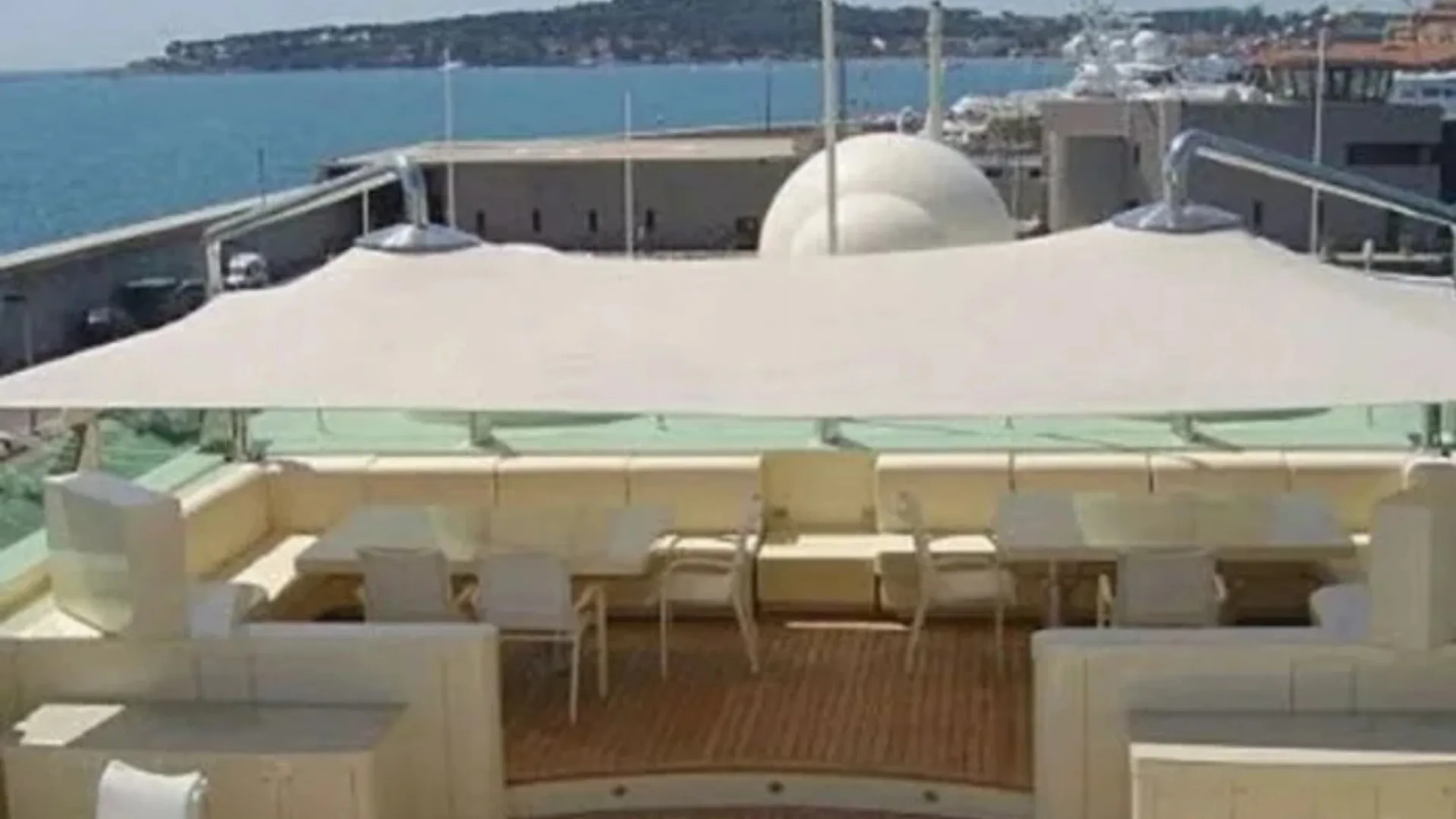
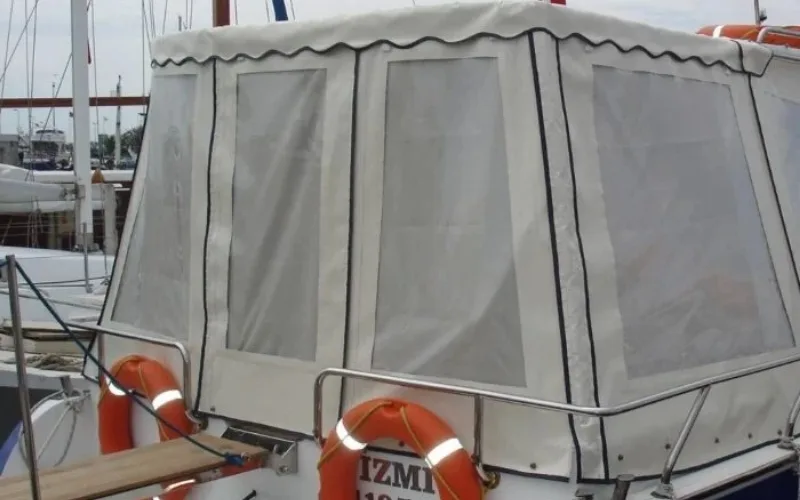
- Canopy (kapela): A cover over the cockpit or upper section of the boat, often stretched on a frame. Those with transparent windows also give a sheltered area while the boat is in use.
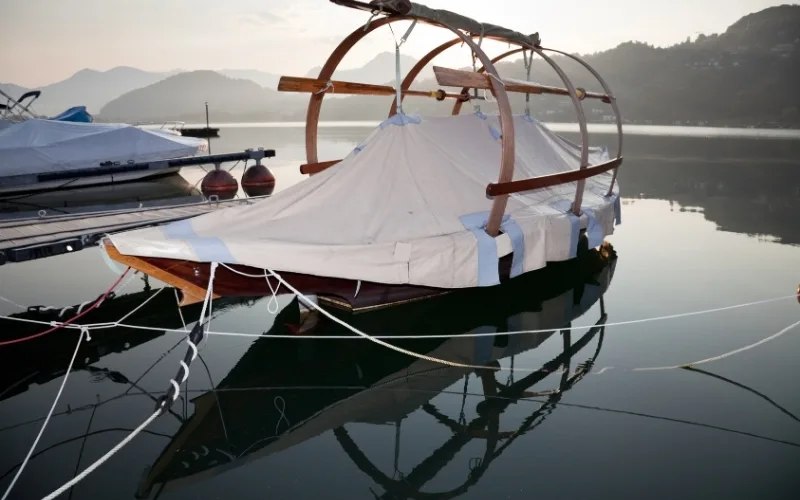
- Boat cover: A cover that wraps the boat from deck level or completely, used for long-term storage.
- Boat tarpaulin: The general name for the fabric these covers are made of and for the cover itself.
What does a cover protect the boat from?
On a boat that is always in the sun, gelcoat, paint, wood and upholstery fade and harden over time. A UV-resistant cover reduces this effect. Rain and sea water collect in the cockpit, seep under the upholstery and speed up corrosion on metal fittings. Dust, leaves and bird droppings leave stains on the surface if they are not cleaned. A covered boat also draws less attention from passers-by.
What to look for when choosing
Material
Boat covers use waterproof fabrics that resist UV and salt water. PVC-coated polyester tarpaulin is a strong choice that is easy to clean. Its weight, how easily it folds and whether it breathes should be assessed according to how you use the boat. Canopies that need a transparent window use transparent PVC panels; see our transparent tarpaulin cover page on this.
Made to measure for the boat
A ready-made cover is either loose or taut on the boat. Water pools where it is loose, and the fabric rubs and wears where it is taut. The cover must be cut to the size and equipment of the boat (rails, antenna, mast, davit). For this we need the boat's dimensions and photographs from different angles.
A shape that does not collect water
If water collects on top of the cover, the weight strains the fabric and seams over time. On canopies the frame drains the water; on flat covers, tensioning and support rods do.
What wears out a boat cover most are the hollows where water collects and the corners that rub in the wind.
Fixing
The cover must not lift in the wind or rub against the boat. Edge ropes, fasteners and reinforcements at rubbing points matter for this reason. A cover that one person can fit and remove is easier to use.
Ventilation
Moisture collects under a completely closed cover, and mould and odour form. On boats that will stay covered for a long time, ventilation openings should be left in the cover.
Winter storage or use during the season?
The design of the cover depends on how the boat will be kept. A boat that spends the winter on land or at its mooring needs a cover that wraps the deck completely. The cover should have a slope that sheds snow and rainwater. Where snow is expected, support should be placed under it. On a boat used often during the season, a canopy that goes on and off quickly and protects the cockpit and helm area is more practical. If you need both, you can consider two separate covers.
What do you need for the measurements?
- The make, model and length of the boat
- The width, length and height of the section the cover will enclose
- The position of rails, antennas, masts and similar protrusions
- Photographs of the boat from the front, back and both sides
- Whether there are points or fasteners where the cover will be tied down
On canopies with transparent windows, wiping the window with a rough cloth or dry cloth scratches it; cleaning with plenty of water and a soft cloth extends its life.
To extend the life of the cover
- Wash the cover with fresh water from time to time to remove salt water and dirt.
- Do not fold a wet cover and leave it in an enclosed place.
- Check the rubbing points and seams at the start of the season, and repair small tears before they grow.
You can find boat tarpaulin options on our yacht and boat tarpaulin page, and other tarpaulin solutions on the tarpaulin systems page. Send us your boat's model, its dimensions and a few photographs, and we will work out the right cover with you and prepare a quote.